

ATLANTA – In his report to the Board of Directors for Global Ministries and Higher Education and Ministry, General Secretary Roland Fernandes identified three overarching themes shaping the agencies’ work today: responding faithfully to a changing and difficult global context, preparing strategically for future organizational transformation, and investing resources where they can create the greatest impact.
Returning to familiar biblical themes that have guided the agency in recent years – Esther 4:14, “for such a time as this,” and Galatians 6:9, “Let us not become weary in doing good,” – he emphasized the importance of rooting this work in perseverance, stewardship, and hope.
Responding Faithfully to a Changing Global Context
Fernandes addressed several global developments shaping the agencies’ work. He highlighted ongoing conflict and instability in Palestine, expressing concern about the grave conditions in the West Bank and Gaza that continue to worsen because of the ongoing war. He reaffirmed the agencies’ commitment to relief efforts as well as accompaniment and advocacy through agency partners in the region and the Methodist Liaison Office in Jerusalem. He underscored the global impact of the U.S.–Iran conflict and resulting economic pressures, particularly rising living costs linked to disruptions in global energy markets.
Since the inception of the This Moment Matters campaign, a joint granting and fundraising initiative that is a direct response to global instability and increased need, the agencies have distributed $38.6 million in grants supporting hunger relief and sustainability efforts, education, peacebuilding, migration ministries, and global health. The campaign will continue through General Conference 2028.
Preparing for Organizational Transformation
Fernandes updated the boards on proposed legislation that would come before them for approval. The legislation would unite Global Ministries, Higher Education and Ministry, Discipleship Ministries, and United Methodist Communications into a new combined agency, pending approval by the 2028 General Conference. He described the proposal as an opportunity to strengthen ministry through greater collaboration while noting that extensive work will still be required to develop bylaws and operational structures. The alignment legislation was approved unanimously by both boards.
A new Strategic Directions document was also presented for board review. The document was designed to guide agency work during the next two years. In considering how best to articulate the vision for a greater, future transformation, Fernandes asked board members to consider the future of The United Methodist Church in the decades ahead and how we might continue to promote the value of mission and impact of the agencies within the connectional system of the UMC.
Investing Resources, Tailoring Programs for the Greatest Impact
The agencies continue to draw on reserve funds to sustain work during this period of significant global need. Between 2025 and 2027, the agencies are projected to use approximately $106 million in reserves, including $69 million from Global Ministries. These resources have enabled the expansion of grantmaking and responses to global humanitarian challenges, including the ongoing impacts of reductions in U.S. foreign aid. Fernandes emphasized that reliance on reserves is a short-term strategy and that future budgets must balance missional commitments with long-term sustainability.
He also requested that the board approve additional, set-aside funds to support the Yambasu Agriculture Initiative, Africa sustainability efforts, and Global Health programs. $20 million in set-aside funds were approved by the boards for these efforts. The Yambasu Agriculture Initiative, which has been in existence for six years, is planning a gathering with African partners at Africa University during spring 2027 for discussions and listening sessions related to key learnings, areas for improvement, and future possibilities.
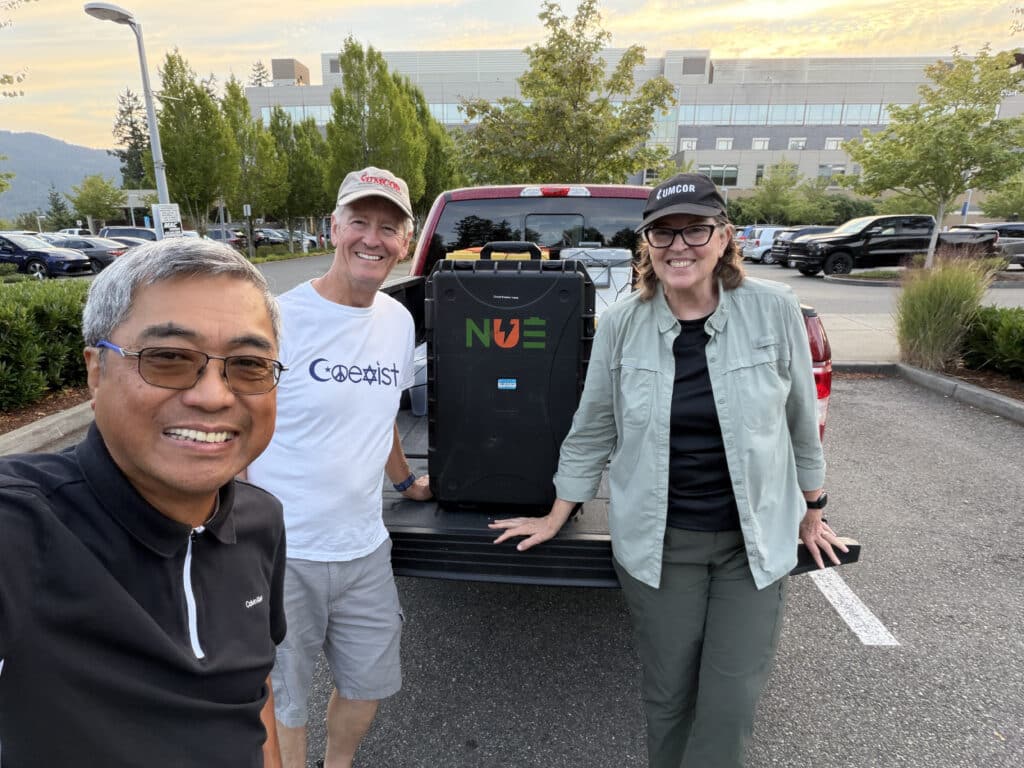
In the area of U.S. disaster preparedness, Fernandes shared an update on UMCOR’s relief supplies network transition, noting that UMCOR has secured agreements with a new relief supply organization and is in discussions with regional relief supply hubs, with the coming closure of the UMCOR Sager Brown Depot in Baldwin, Louisiana, at the end of 2026. These changes are intended to modernize UMCOR’s disaster response ministries.
He highlighted Global Ministries’ growing emphasis on the work of peace and justice, which seeks to advance reconciliation, human dignity, and human rights through grants, advocacy, leadership development, and partnerships with churches and civil society organizations around the world. A focus on human rights seeks to bring the concerns of local communities into international forums while equipping faith-based partners to advocate for sustainable peace and justice.
In theological education, Higher Education and Ministry has completed a major revision of the Course of Study curriculum, which reduces and streamlines the required courses. The new curriculum offers a flexible new structure that removes distinctions between part-time and full-time participation and allows Course of Study schools greater adaptability in course delivery and scheduling. Though the changes do not go into effect until fall 2027, they have already been well-received by schools and students.
The joint agency scholarship program for 2027 will be restructured to reduce complexity, increase scholarship accessibility, and extend greater support to students outside the United States. Under the new model, more than 40 percent of scholarship awards will be directed internationally, reflecting the increasingly global nature of The United Methodist Church. Up to $6 million in funding will be available for the 2027 application cycle. In 2025, approximately $4 million in scholarships was awarded to 2,450 United Methodist students pursuing undergraduate, graduate, and theological degrees at 601 institutions in 13 countries.
After reporting on progress related to Regional Conference Higher Education Fund grants and disbursements benefiting UMC-related HBCUs, Fernandes voiced his desire to better support chaplains at UMC-related educational institutions. Conversations between episcopal and educational leaders will also be planned.
Fernandes reminded the boards and staff that “hope is a choice we make,” a conviction that continues to shape the agencies’ work connecting the church in mission, alleviating human suffering, connecting the church and the academy, and developing transformational leaders for the church and world.
As the final board worship concluded, the Rev. Dr. Candace Lewis, president and dean of Gammon Theological Seminary, delivered an inspiring sermon on the contagious power of courageousness saying, “Friends, we can lead courageously, following Jesus’ example, as we resist and dismantle all systems of evil, injustice, and oppression, striving for peace, justice, and reconciliation.”
Susan Clark is the chief communications officer for Global Ministries, UMCOR, and Higher Education and Ministry. Sara Logeman is the senior manager of Content and Marketing for Global Ministries, UMCOR, and Higher Education and Ministry.