
“When people realize that being HIV positive is not the end, but the beginning of a stronger journey, everything changes.”
Margaret Nakumicha,
a community health worker Karagita area, Kenya
NAIVASHA, KENYA – Along the tranquil shores of Lake Naivasha in Kenya lies a vibrant yet vulnerable community – a mosaic of fisherfolk, flower farm workers, informal traders and young people seeking daily livelihoods. Behind the lake’s beauty are deep struggles: poverty, mobility and the stigma surrounding HIV and AIDS that still shadow many lives.
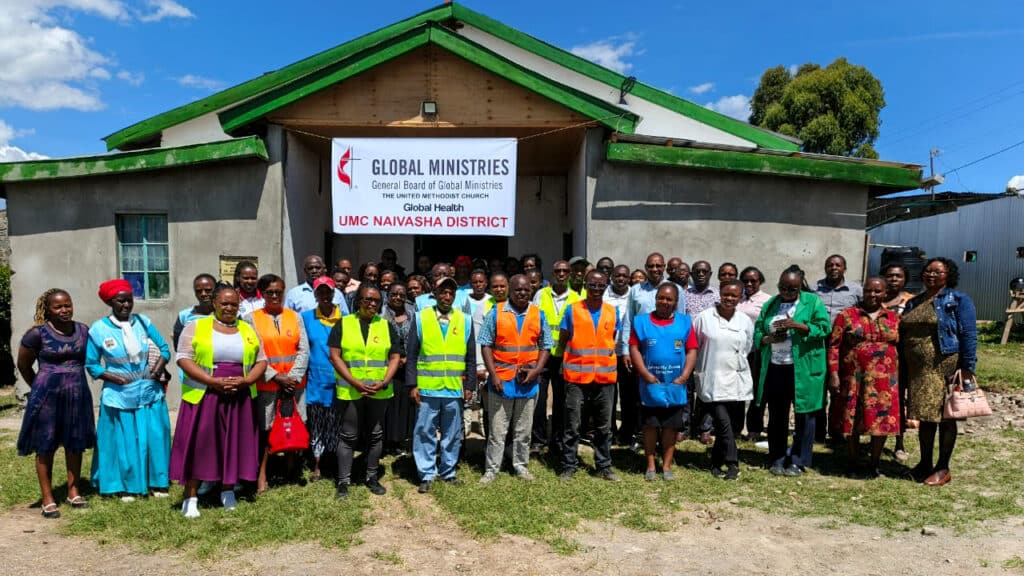
With the support of a Global Ministries’ Global Health grant, our work in Naivasha seeks to restore dignity, health and hope among those most at risk. The program reaches out to key populations – women and men engaged in the fish and flower industries, sex workers, and youth who often face barriers to accessing health care and social support.
The purpose of the grant is to reduce HIV transmission and stigma by expanding access to testing, counseling and treatment, while strengthening psychosocial support, vocational empowerment and faith-based advocacy. Through mobile outreach clinics and partnerships with local health facilities, hundreds of residents now receive ongoing care and education on HIV prevention and reproductive health. We will hold community outreach to promote HIV prevention with stigma mitigation and offer HIV counselling and testing services targeting the transport corridor (MaiMahiu and Longonot), Lake Naivasha belt (Karagita and Kamere) and the Central Business District (Kihoto and Mithuri communities).
“We are not just offering medicine; we are restoring confidence and breaking silence,” says Margaret Nakumicha, a community health worker serving the Karagita area. “When people realize that being HIV positive is not the end, but the beginning of a stronger journey, everything changes.”
Local clergy have also become instrumental in addressing stigma through compassionate preaching and community dialogue.

As the pastor of Trinity United Methodist Church, I believe our call is to remind everyone that God’s grace includes those living with HIV. The church must be a place of healing, not hiding.
Among the many touched by the initiative is Linet, a single mother of two who works in the informal fish market.
“Before, I feared even being seen at the clinic,” Linet says softly. “Now, I walk with courage. My children see me living – not just surviving.”
As the world observes World AIDS Day, the Naivasha lakeside reminds us that progress is not only in numbers but in the transformed hearts of communities once silenced by fear. Through faith, partnership and shared humanity, hope is rippling outward beyond the waters of Lake Naivasha – one life, one family, one shoreline at a time.
On World AIDS Day, to help further the progress made in treatment and prevention of HIV and AIDS as well as in supporting people who live with the virus, give a gift to the Global AIDS Fund, Advance #982345.
The Rev. Dr. Paul Matheri is the dean of superintendents for the United Methodist Kenya-Ethiopia Annual Conference and co-founder and director of INUA Partners in Hope, which supports and empowers orphans and vulnerable youth in Naivasha.