Today, I consider myself an active participant in prevention within my community!
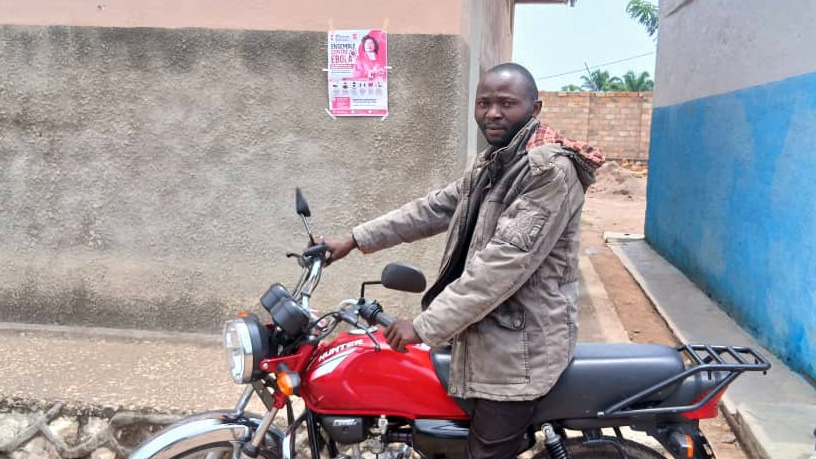
CWJ*, a motorcycle taxi driver in Kolwezi, DRC.
CWJ, one of South Congo’s motorcycle taxi drivers, transports people from various neighborhoods in Kolwezi every day. And even though the Ebola virus has not yet spread into the neighborhoods he travels, he is prepared to talk with people about it. Because of the work of United Methodist health and community outreach workers, CWJ is spreading helpful and verified information about the disease instead of misinformation that spreads fear faster than the virus itself.
“Thanks to awareness-raising efforts, I have learned how to prevent Ebola and communicate about its risks,” CWJ explained. “I share this information with my passengers during my trips. I remind them of the importance of hygiene and seeking prompt medical attention.”
Health workers and volunteers trained by the South Congo UMC Health Board delivered their life-saving information at the taxi station where drivers gather to check their vehicles and prepare for their workday.
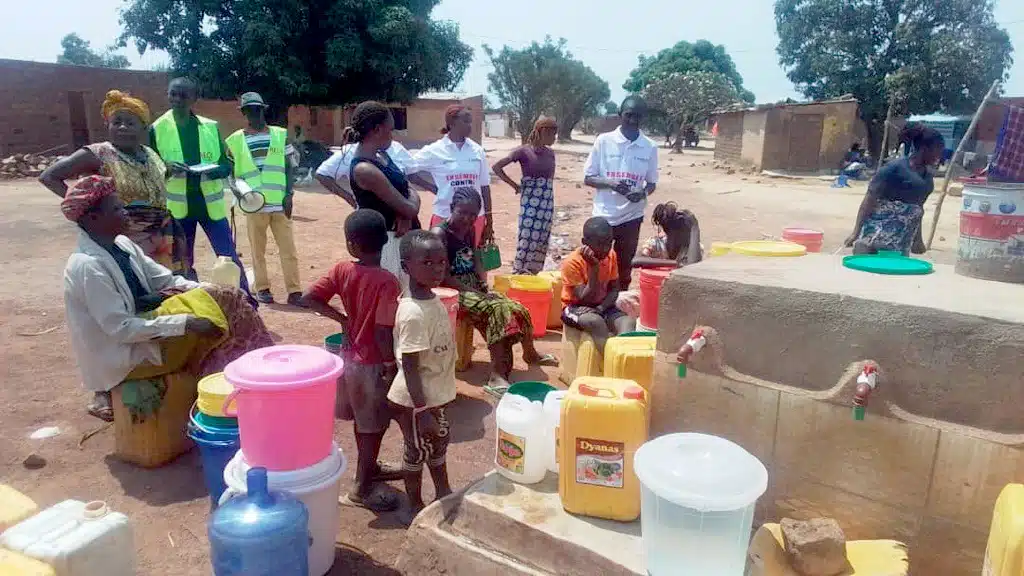
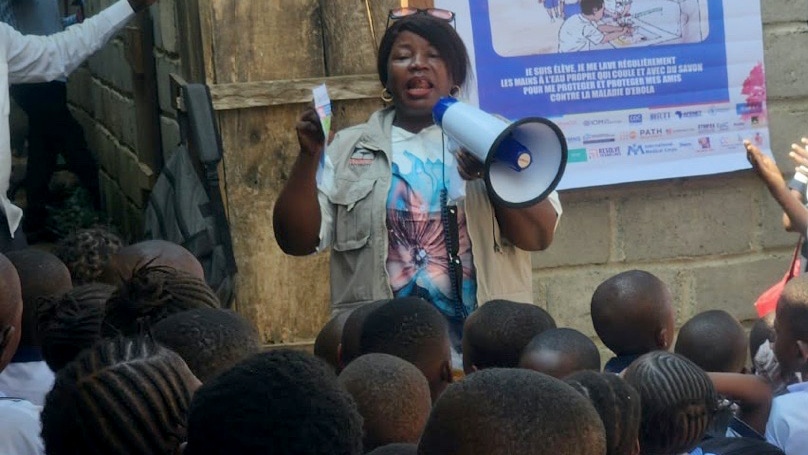
In fact, one project in South Congo, supported with a Global Health grant from Global Ministries, spread information about Ebola through schools and market places, churches and medical clinics. It began by training close to 100 people in key positions, such as communicators, health workers, community outreach workers, and pastors. Radio and video broadcasts were created for wider reach. By the time the original campaign ended, they had reached an estimated 36,000 – 45,000 people with a message of hope and reliable information about how to prevent transmission of the disease.
Multiply this by similar projects supported in other areas of the DRC by adjacent episcopal areas across UMC health boards and health facilities, as well as phase two and three grants revisiting the same areas with new resources, and the numbers of people reached grows to hundreds of thousands.
Serious, but Not Impossible
The Bundibugyo Virus Disease (BVD), a new form of Ebola that first appeared in January 2026 in the Bunia area of East Congo, poses a serious threat to public health. It has no cure and a vaccine is only now being developed. If it cannot be contained, it can affect regional stability, cross-border movement and can weaken vulnerable communities with limited health resources, particularly in transit areas used by industry workers and migrants alike.
Dr. Jean Kaseya, director-general of the Africa Center for Disease Control and Prevention, is keenly aware that medical intervention alone is not enough to combat this kind of communicable disease. “Containing and ultimately stopping this outbreak will come from communities,” he said, as part of a joint press release with the World Health Organization in June. “When people have information they trust, can report symptoms early, and seek care without fear, we can break every chain of transmission. Our responsibility is to bring the response closer to communities and give frontline teams the support they need.”
Communities that are directly involved in surveillance, referrals, treatment, safe and dignified burials, and decisions affecting their families are highly motivated. And because of that, community and religious leaders, women and youth leaders, have a critical role in building trust, addressing concerns, and ensuring that response measures reflect what is really happening in their communities.
Data from the DRC Ministry of Health indicates that as of Oct. 11, there are 8,978 confirmed BVD cases in the DRC, with 4,336 deaths – a fatality rate of 48%.
The Ministry of Health also reports that cases are currently increasing, but at a slower pace. Spread to neighboring countries and DRC provinces continues to be a concern. For instance, Kenya reported its first death from this Ebola outbreak in September.
New Partners, More Faith-Based Cooperation
Many factors determine how an outbreak grows or decreases. For instance, over 59% of Ebola cases are women, with half of those being girls under 18. This is primarily driven by the social roles women play for caregiving and serving as health workers. Many young children are among the number who have died, in part because this health crisis is also leading to fewer pregnant women and young children going to health clinics and facilities – missing prenatal care, newborn follow-up visits, and vaccinations. This leads to more women giving birth at home and an increase in measles and malaria cases.
Other key factors that hinder containment include:
- Delayed direction and detection, leading to late response;
- Armed conflict;
- Compromised community trust in government and health facilities;
- Unpaid and under-resourced health workers.
One of the projects being considered in the next round of health grants is to provide more mobile health clinics, so that women and children will not have to leave their communities and travel dangerous routes to receive routine, preventive healthcare.
“The churches’ role is critical in the next few months,” reported Kathleen Griffith, director of Global Ministries’ Global Health unit, to the board of directors, meeting Oct. 7-9. “Delays will risk a long-term spread to Uganda, Kenya, Burundi, South Sudan, and other adjacent countries. Community engagement, inclusion, and advocacy are key in helping with protection from exposure. UMC health facilities in border countries to East Congo are helping to fill the health service and communication gaps and updating vaccines.”
Global Ministries has directly supported additional faith-based and nonprofit organizations that are working along the same lines in different places of the DRC and has provided grants that make it possible for UMC health teams to increase their ability to partner. For instance, the East Congo UMC Health team is building an Ebola treatment center at the Bambu Referral Hospital outside of Bunia. In addition, the UMCOR East Congo Disaster Management Office is providing food and nutritional relief for patients and health workers in the same area.
Communication strategies have been developed with the help of the episcopal area communicators and a joint grant with Global Ministries and United Methodist Communications (UMCom).
As of Oct. 2, Global Ministries has awarded a total of $1,058,483 for Ebola response and prevention in Africa, which includes a UMCom grant of $40,000.
More grants are in process for awareness raising, education, and information about Ebola, particularly for neighboring countries. Support to increase preparedness in UMC health facilities located along travel routes are in the next phase of granting.
*Name has been withheld.
Christie R. House is a consultant writer and editor with Global Ministries, UMCOR and GBHEM.
AFRICA CDC Resources
Fact sheets on the Ebola virus:
English: https://africacdc.org/wp-content/uploads/2026/05/Factsheet_Ebola_English.pdf
French: https://africacdc.org/wp-content/uploads/2026/05/Factsheet_Ebola_French.pdf
Global Health
Through United Methodist conferences and health boards, Global Ministries works to strengthen whole networks of health responses, from revitalization of facilities and staff training to building better water sources, developing sanitation facilities, and promoting nutrition. Global Health concentrates on preventing, testing, and treating those affected by preventable diseases, such as malaria, HIV and AIDS, and Ebola, and supporting the most vulnerable populations, including mothers, newborns, and children.