
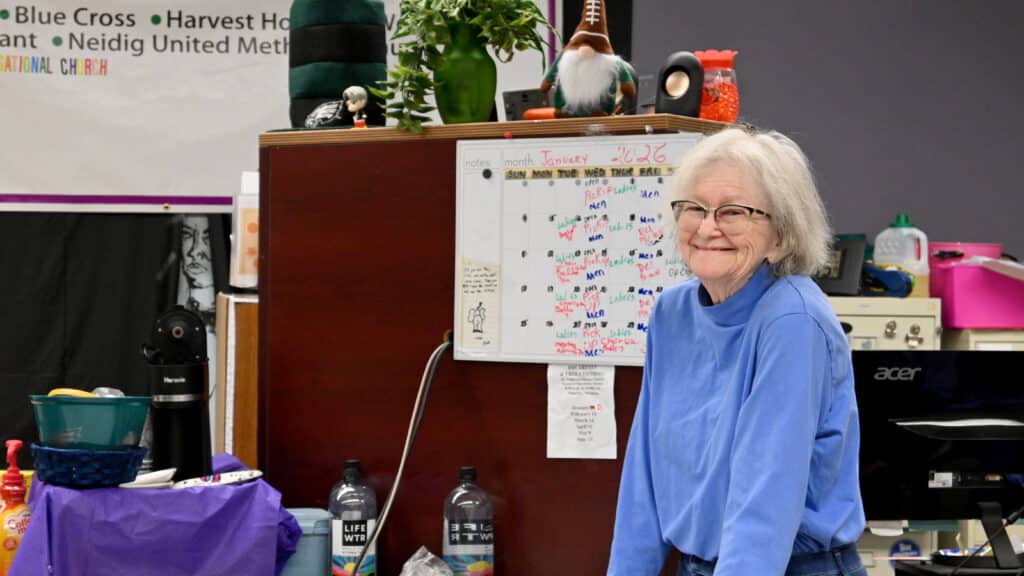
In 2015, Lyn Clark was working in an elementary school as a nurse, and she noticed that some of the children would take an extra muffin or two from the food line and put them in their backpack or pockets.
“Do you really like the muffins that much?” she asked one of the boys.
“Not really,” he said. “It’s just that now we will have something to eat when we go home for the weekend.”
“That did it for me,” Clark said. “It took me less than a month to formulate this pantry. I started it with about 30 families in the school. It was in one room from three to five at night. It grew exponentially from there.”
Clark, who is the director of Family Fresh Food Pantry, which received a Feeding Our Neighbors grant, and now housed and supported by Neidig UMC in Oberlin, Pennsylvania, is one of many compassionate and determined people who believe no one should go hungry. But 2025 was a hard year to keep pantries stocked and open.
“We just spend on faith.”
On Oct. 1, 2025, the U.S. Federal government shut down after Congress failed to come to agreement on budget appropriations, so many Federal programs laid off workers and ceased funding, affecting most government operations. By mid-October, it became clear that the Supplemental Nutrition Assistance Program (SNAP), would not distribute benefits in November, and anyone who depended on those benefits would suddenly be left with a gap in their ability to buy food – a gap that most could not make up in their already strained household budgets.
As a result, food pantries across the country began to see an increase in need. At the same time, pantries that depended on USDA funding or food stocking programs had already seen a drop in food availability and increase in cost because of actions taken by the new Department of Government Efficiency in April and May, which slashed staff and billions of dollars from the U. S. Department of Agriculture (USDA).
Global Ministries quickly designated a portion of United Methodist Voluntary Service funds to offer 150 grants of up to $2,000 to help church pantries stretch their dollars and provide additional food to meet the demand. Dr. Dana Lyles, the executive director for Multiethnic Ministries, noted: “The cuts to social service programs that serve families struggling with job loss and the lack of access to medical care and nutritional food strains nonprofit and church programs. These grants provide a boost for United Methodists to stand together with their partners to protect the most vulnerable in our communities.” Funds for these grants are from offerings received by churches on Human Relations Day, observed on Jan. 18 this year. Within days, the “Feeding Our Neighbors” grant program had received more than 300 applications.
“At the time that we applied and received the funds…and I appreciate that it was so fast…all the SNAP benefits were cut,” explained Pastor Diana Fajardo, of The Tent UMC in Omaha, Nebraska. “The population in this area needs food stamps. With these funds, we focused on shelf-stable food, in a manner that they could be able to fill their pantries at home. But we were also able to get things like meat and cheese and eggs, so we could sustain nutrition during this process. The timing was a lifesaver for us.”
Doug Madden, council director and pantry director of First UMC in Ponchatoula, Louisiana, received a grant for the church’s Our Daily Bread pantry, which had been receiving USDA supplies through Second Harvest.
“It was a perfect storm,” Madden said. He narrated the journey from COVID shutdown to Hurricane Ida in 2021, which increased emergency food availability, to high inflation in 2022, to a problem with the main pantry distributor in New Orleans in 2024, and then the government shutdown in 2025.
“The USDA changed their program dramatically and the food bank gave less and less food. What we were doing became even more important, so we just continually increased the amount of food we were putting in the boxes every month. The 120-member congregation donates nonperishable items or they give money.”
Five years ago, First UMC’s Daily Bread served 25-30 families a year. “Last month, we moved up to the second largest pantry in the parish,” Madden said. “We have 127 families and about 100 that show up for any given food distribution.” In addition to the grant from Global Ministries, Madden said they also received a grant from the Louisiana UMC Conference Foundation.
“We just spend on faith,” Madden said. “We know how much we have and we spend it all on food.”
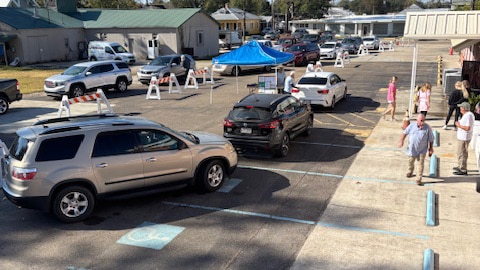
Everyone needs food
Across the country, United Methodist churches in rural farmlands, in large cities, high up in the mountains, along coastal areas, in the desert, in small towns – have doubled their efforts to provide food in communities that are increasingly slipping into food insecurity.
In Alaska, the pantry at North Star UMC on the coast of the Kenai peninsula has contended with multiple cyclones and more than eight feet of snow, and it still opened to distribute food on pantry day.
“It’s minus 28 degrees here this morning,” noted coordinator Fred Miller. Currently, the pantry serves about 200 people a month. Miller has been working on a business plan to expand and sustain the pantry to continue its mission to alleviate hunger in the Nikiski community. The Feeding Our Neighbors grant helped in that effort.
In Baltimore, St. Luke’s UMC, which was down to about 20 members three years ago, is now 100-members strong with many volunteers from the neighborhood coming to help with Two Fish and Five Loads, another grant recipient.
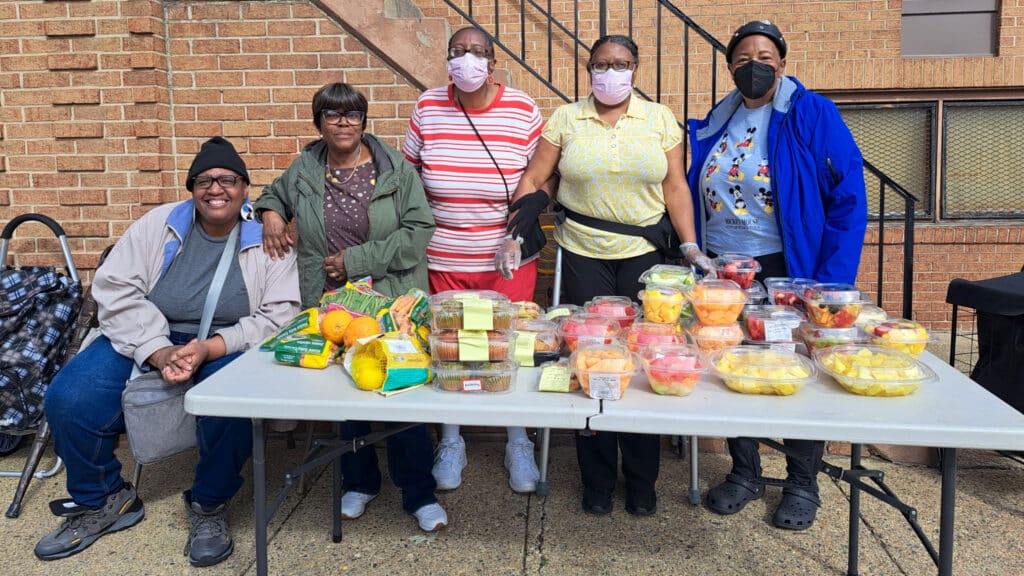
“That’s right, five loads,” Pastor Angelic Williams confirmed. They provide laundry detergent pods and dryer towels in addition to food because they discovered one of the reasons kids were missing school was because they had no clean clothes to wear. The church concentrates on food justice and food distribution in its mission outreach because that is the greatest need in their community. They also rescue good food that businesses would otherwise throw out.
“The pantry gives out food boxes, but it also does Pop-up Wednesdays when we have additional grocery items or fresh food donated by area stores or bakeries or restaurants,” Williams added. “It goes out on a table in front of the church, and it is ‘first come, first served’ for as long as the supplies last.”
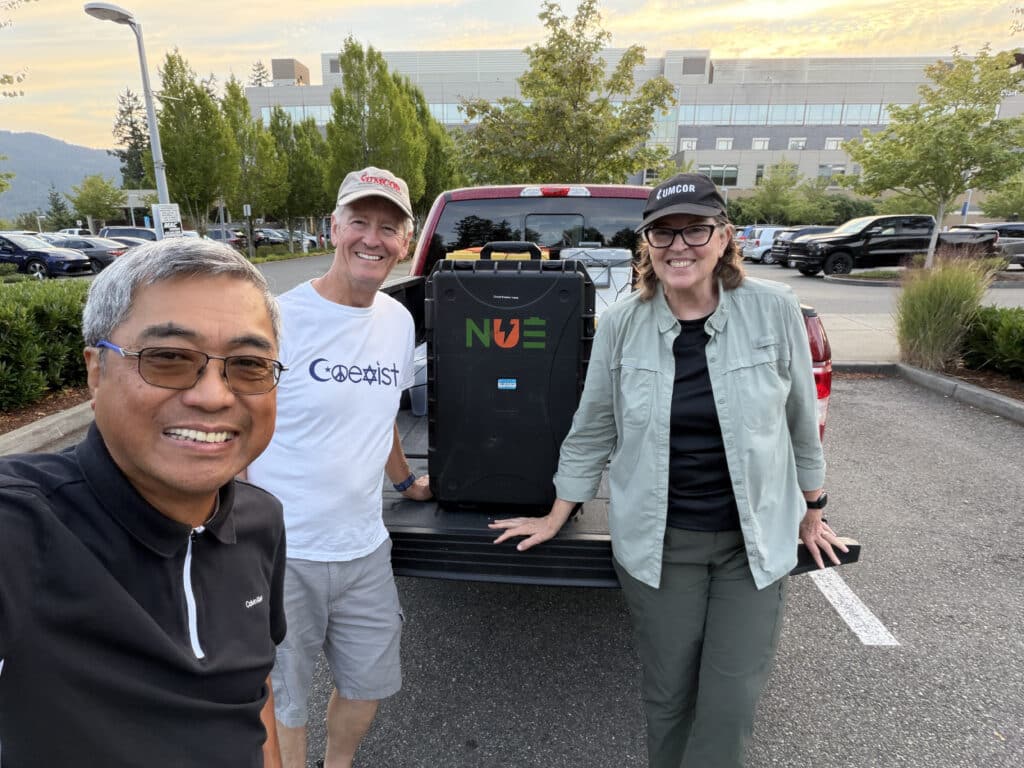
In Julian, California, up in the Vulcan Mountains above San Diego, Pastor Dawn Christiansen secured a grant for Community UMC’s Mountain Manna Food Pantry. This church of about 72 members in a town of 1,768 people increased its pantry when they discovered they qualified for a San Diego County grant and could get food from Feeding San Diego… if they were able to drive an hour down the mountain in a few pick-up trucks to collect the boxes. That’s part of what the Feeding Our Neighbors grant was for – to help reimburse the gas cost for their volunteers.
In 2025, Mountain Manna opened additional pantries in two desert communities below them, Shelter Vally and Butterfield.
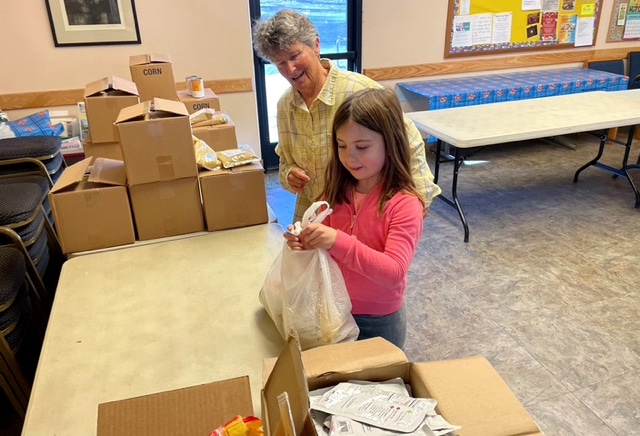
Food insecurity, a constant disaster
On the other side of the country, in Esperance, New York, the Esperance-Sloansville UMC pantry has an entirely different approach to serving its community. Sharon Niggemeier, one of three volunteers that coordinates this pantry, says they have a sign outside the church by the main road that says “If you need food, call this number…” They talk with clients and then meet them at the church.
“Some people ask why we don’t just do every Tuesday, or something like that, but, that doesn’t work up here. Many of our clients don’t have cars, and we’re rural. They depend on people to drive them, and we have to wait for them to get a ride and be here when they need us.” They have a membership of about 20, and all their food comes as donations – from everybody in town…other churches, businesses, grocery stores, and people who just want to give. Their grant added extra food to their boxes.
In Mobile, Alabama, Ashland Place UMC partners with Dumas Wesley Community Center, which provides space for the Joseph Project Community Food Pantry. They have seen a 25% increase in the number of people coming for food. Cammie Singleton, who runs the pantry for Ashland Place UMC, says she cannot understand the claims of waste in the system.
“People who think there is abuse in the system need to come serve alongside me for a few days. Our clients (whom we call neighbors) are seniors, singles living in government housing, and grandparents trying to raise grandchildren because their children are afflicted by substance abuse and addiction. Some are battered women just trying to feed their kids.”
“Since we endure so many hurricanes here, we are big fans of UMCOR. But food insecurity is a big problem today that doesn’t get solved by a food box. UMCOR responds to disasters, but food insecurity in this area has become a constant disaster.”
Christie R. House is a consultant writer and editor for Global Ministries and UMCOR.
Human Relations Day is an opportunity to stand with other United Methodist churches to build the beloved community envisioned by the Rev. Dr. Martin Luther King Jr. This denominationwide Special Sunday is designed to strengthen human relationships and community outreach.
Gifts made on Human Relations Day, Jan. 18, 2026, support the Community Developers Program as well as community advocacy and service through the United Methodist Voluntary Services administered through Global Ministries.