
Leaders from Methodist educational institutions across the Asia Pacific region gathered January 18–21 in Manila, Philippines, for the 2026 Asia Pacific Association of Methodist-related Educational Institutions (APAMEI) Conference, themed “Making Peace Peacefully through Education in our Multicultural World.” Hosted by the Wesleyan College of Manila and Philippines Christian University at the Heritage Hotel, the conference drew bishops, scholars, educators, students, and mission partners committed to strengthening Methodist education’s role in building peaceful societies.
The formal program began with worship led by Bishop Emerito Nacpil, whose sermon explored the relationship between grace and peace. Naming the many realities of violence—from poverty and illness to political conflict—he called participants to embody Jesus’ message of peace as a gift to be extended to others. APAMEI President Dr. Florita Miranda offered an overview of the association’s history, including past conferences, pandemic‑era virtual gatherings, and evolving partnerships.
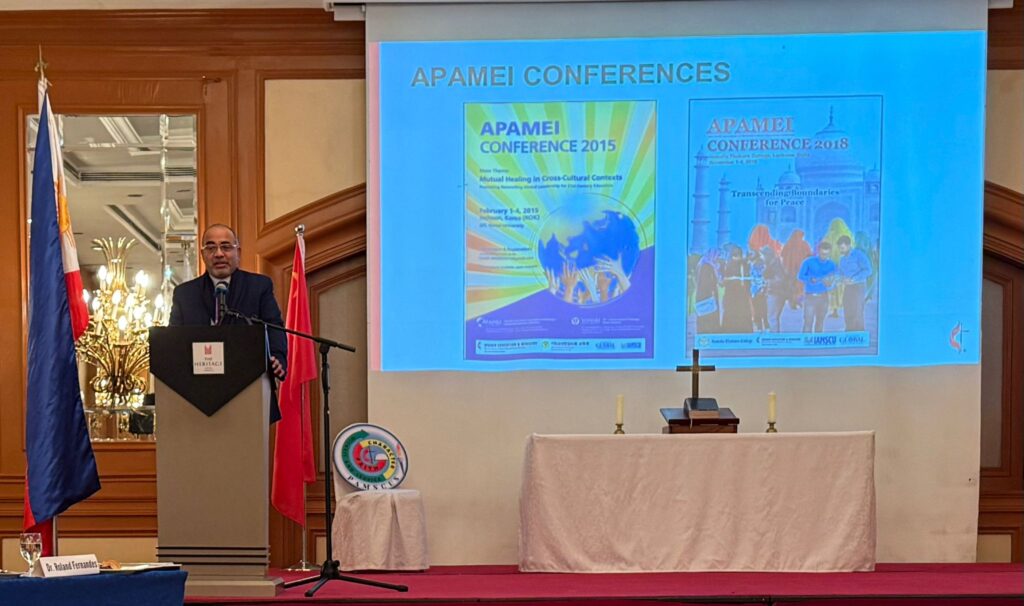
Roland Fernandes, General Secretary of GBHEM, GBGM, and UMCOR, delivered the first keynote address: “Education and Peace in Asia Pacific: Prospects for Partnership.” Drawing on his personal ties to India and the Philippines, Fernandes underscored the urgency of peace amid global conflicts in areas such as Korea, Myanmar, Ukraine, Gaza, Kashmir, the Philippines, and Venezuela. He emphasized that peace pursued through coercion is not real peace at all. Fernandes highlighted instead a biblical and Wesleyan vision of peace rooted in shalom, justice, and the commitment to “do no harm.”
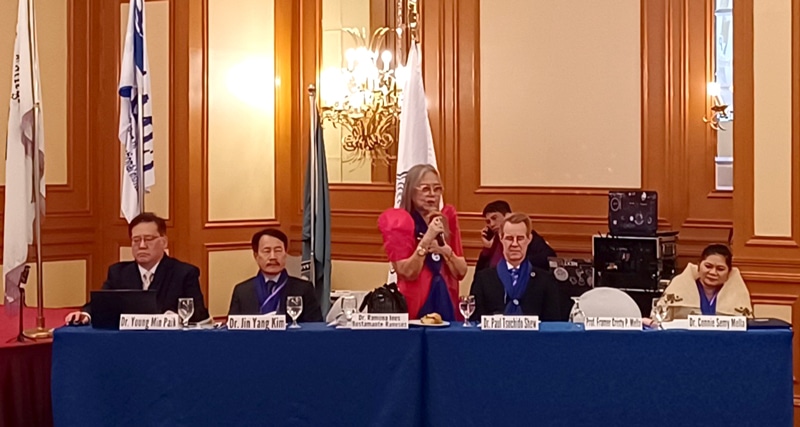
Fernandes invited APAMEI to deepen its impact through three modes of engagement—alignment to God’s mission through prayerful discernment and faithful participation, open communication and dialogue that builds trust, and commitment to peace that motivates concrete actions. He outlined opportunities for strengthened partnership through mutual support and ecumenical relations, praising the connectionalism demonstrated by APAMEI. He also shared the alignment and ongoing learning that has come from the intentional collaboration between Global Ministries and Higher Education and Ministry, and informed participants about the five areas of focus for the agencies’ response to contemporary challenges worldwide: agriculture and food security, education, global health, migration, and peace. He encouraged APAMEI to partner with the agencies in leadership development, data sharing, innovative programming, and sustainable resource models to prepare for the future.
Conference sessions continued with interdisciplinary presentations showing how peace education intersects with technology, science, history, and community care. Scholars explored topics such as AI in the classroom and digital responsibility, democratic resilience in South Korea, biotechnology and food security, psychosocial and spiritual care after disasters, and reconciliation as an educational practice.
Connecting the Church and Academy, messages from Bishop Ciriaco Francisco and Bishop Israel Painit expanded the conversation, with both bishops emphasizing Jesus’ repeated call to peace and the responsibility of Methodist educational institutions to form leaders for the transformation of the world. Speakers then addressed themes ranging from personal well‑being and biomedical innovation to ecological regeneration, misinformation, intercultural communication, feminist theological responses to child exploitation, and the weaving together of Indigenous and Wesleyan wisdom for peacebuilding.
The approval of a new APAMEI Declaration was a major milestone of the conference, the association’s first since 2018. Facilitated by Dr. Connie Semy Mella, delegates reviewed and refined the document, affirming a shared commitment to peace that is rooted in grace, justice, and education responsive to the challenges of a rapidly evolving world.
The final day of the conference included school visits and additional meetings that strengthened institutional connections, expanded partnerships, and highlighted the transformative work already taking place across the region.
Throughout the conference, one theme emerged clearly: Methodist education in Asia Pacific plays a vital role in shaping leaders who can build peace peacefully—through justice, dialogue, spirituality, and courageous action. As Dr. Fernandes noted, the challenges are immense, but so is the opportunity. By walking together, APAMEI and its partners can help create a future marked by hope, collaboration, and God’s peace for all.