
Technical support is just as vital as financial investment, because people can learn how to adapt to new crops and sustain their progress.
Kutela Katembo, agricultural missionary working with East Angola YAI
MALANJE, Angola – United Methodists in Eastern Angola have launched an agricultural initiative that is transforming communities and reshaping lives.
Maria Cadir, 71, has seen how the Eastern Angola Annual Conference’s program has changed not only her life but that of others in Nguvu Massango Lau Village, where she lives. It has boosted agricultural output and self-sufficiency, and the benefits extend beyond farming.
“The proceeds from our harvest make it easier to provide medical care, support our children’s education, and reduce hunger in the community,” Cadir said.
Backed with funding from Global Ministries of The United Methodist Church, the program has supported food security and cattle breeding projects. More than 600 families have been trained, assisted, and equipped with agricultural inputs, leading to improved livelihoods, greater resilience against hunger, and sustainable community development.
Through the Yambasu Agriculture Initiative, families that once struggled to afford seeds due to rising market prices have achieved food security and avoided famine, which is a problem in Eastern Angola. Projects unfold in different phases so that experience and learning increases and further projects can be refined and adapted to fit local conditions in the regions.
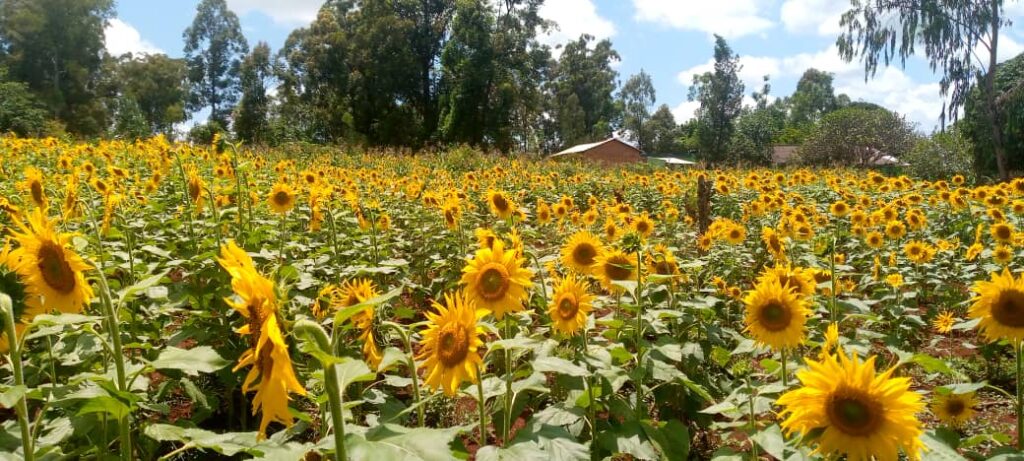
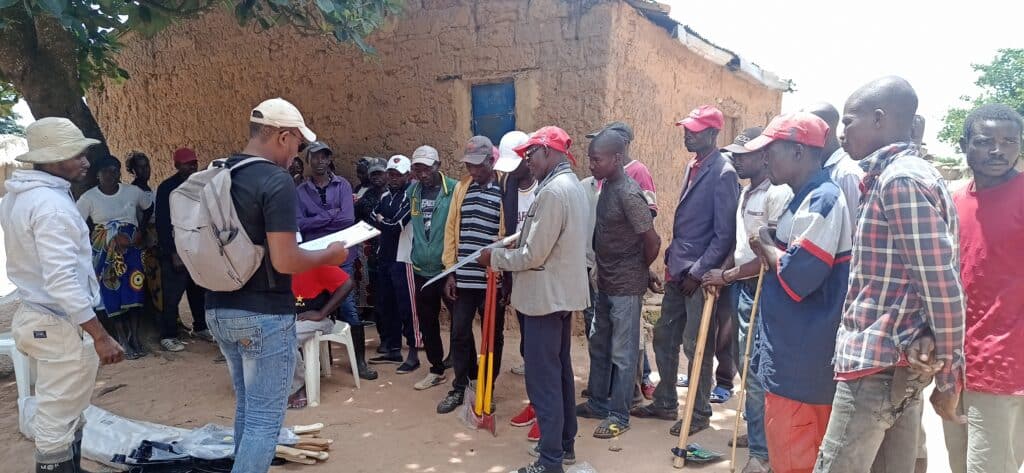
The conference’s objectives are to strengthen beef production and support the communities of the Kimbamba area, near Malanje, while building a sustainable and independent church through agriculture. Communities benefit from agricultural extension services, receiving training in best practices and seeds for groundnuts, vegetables, and staple crops.
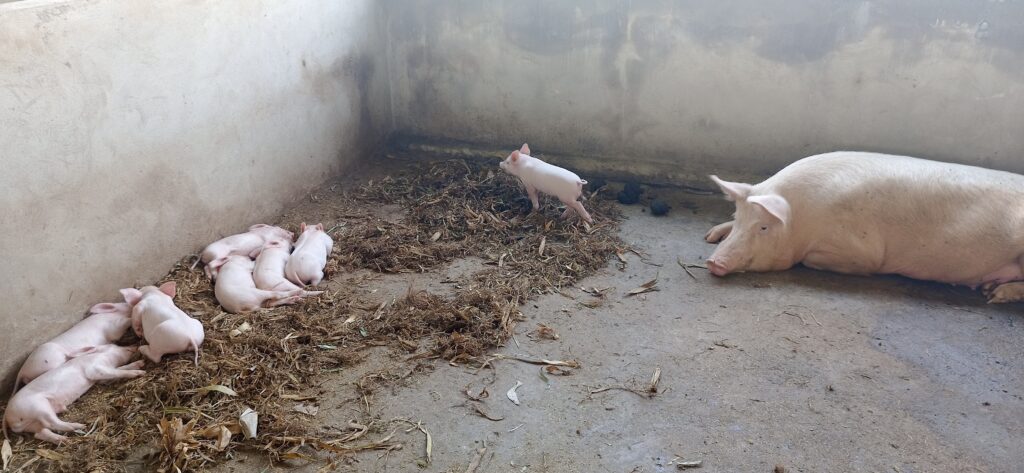
Photo: Gilberto João Augusto Guedes
The conference supports cattle production and 140 piggery projects. Through the initiative, the communities received 30 pigs. Proceeds from the initiative have funded the construction of a second pigsty, helping address urgent needs of the conference.
Addressing Family Challenges
“In 2023, the project was linked to two main objectives: food security, aimed at supporting the communities in the Kimbamba District, and livestock farming, which is considered a long-term project,” said the Rev. Jeovanni Mendonça Mendes, project coordinator. “We began with 51 head of cattle to benefit families in several communities and today that number has grown to 63.
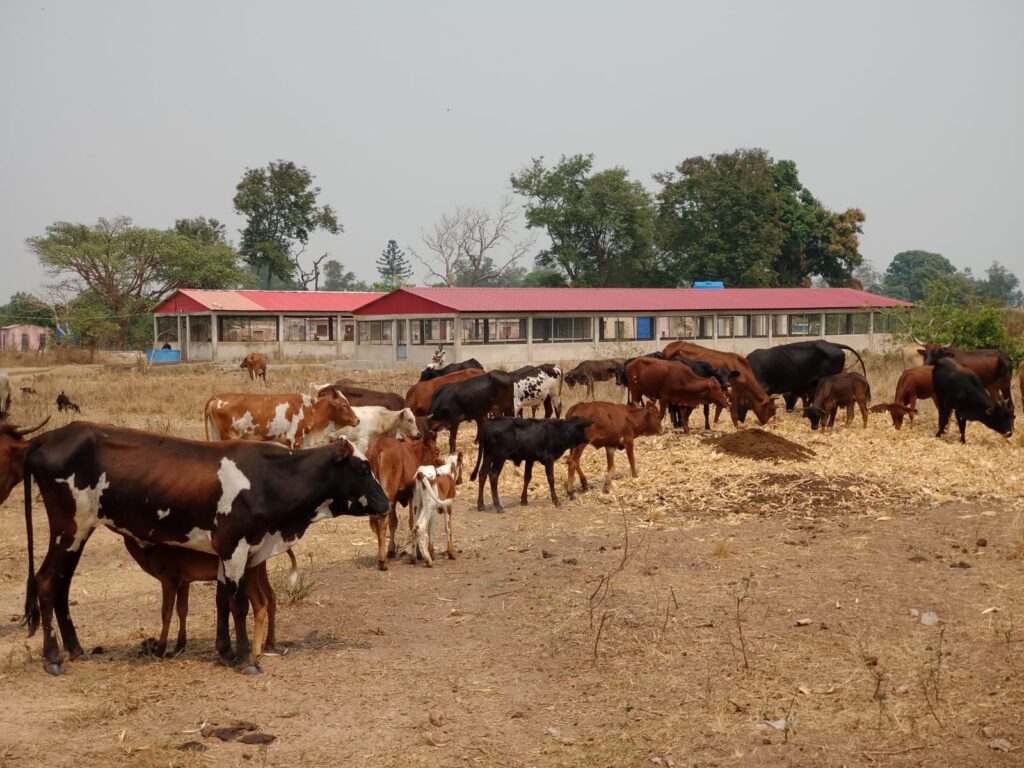
Photo: Gilberto João Augusto Guedes
“Through the projects, we managed to develop infrastructure and empower the coordination team,” he said. “Their involvement throughout the process was magnificent. Families were supported with improved seeds like corn, groundnuts, beans, and vegetables, which ensured a richer and more stable diet. This addressed family challenges such as the ability to take children to the hospital, support their education, and improve their homes.”
Mendes also emphasized the economic benefits of the two-year project, which concluded in 2025.
“The sale of surplus production generated additional income and trained communities in innovative agricultural techniques,” he said. “This led to increased production not only during the grant phase of this Yambasu project but also afterwards as another phase of operation began. Families developed a willingness to continue these partnerships, enhancing food security through seed preservation and improved crop production. Their piggery project is also doing well.”
The successes weren’t without challenges.
“There were difficulties in sourcing quality livestock breeds, as they were located in very remote areas,” Mendes said. “We also faced a lack of equipment in the market, such as corn harvesters, and theft from cornfields despite having guards. Yet, in spite of these challenges, the spirit of the project was not dampened.”
Providing “Living Insurance”
“The Yambasu project distributed herds of pigs to families, enabling them to own live assets that have become a natural financial reserve. During the recent dry season, these animals were a decisive factor in the communities’ resilience.
“Unlike many crops that can be completely lost in a single drought or flood, livestock is more mobile and resilient to moderate climate fluctuations,” he explained. “It serves as a form of living insurance.”
In Maria Cadir’s village, the distribution of pigs has been a boon. “We were able to increase the number of pigs in the neighborhood, which benefits everyone who participated,” she said.
“We also managed to preserve seeds for corn, groundnuts, beans, and vegetables,” Cadir continued. “Because of that, we no longer need to buy seed, and the money we used to spend has been diverted into other meaningful activities.
“To this day, the inputs we received continue to help us in our farming activities,” she added. “They have become the foundation for our resilience and growth.”
That knowledge transfer is important, according to Katembo.
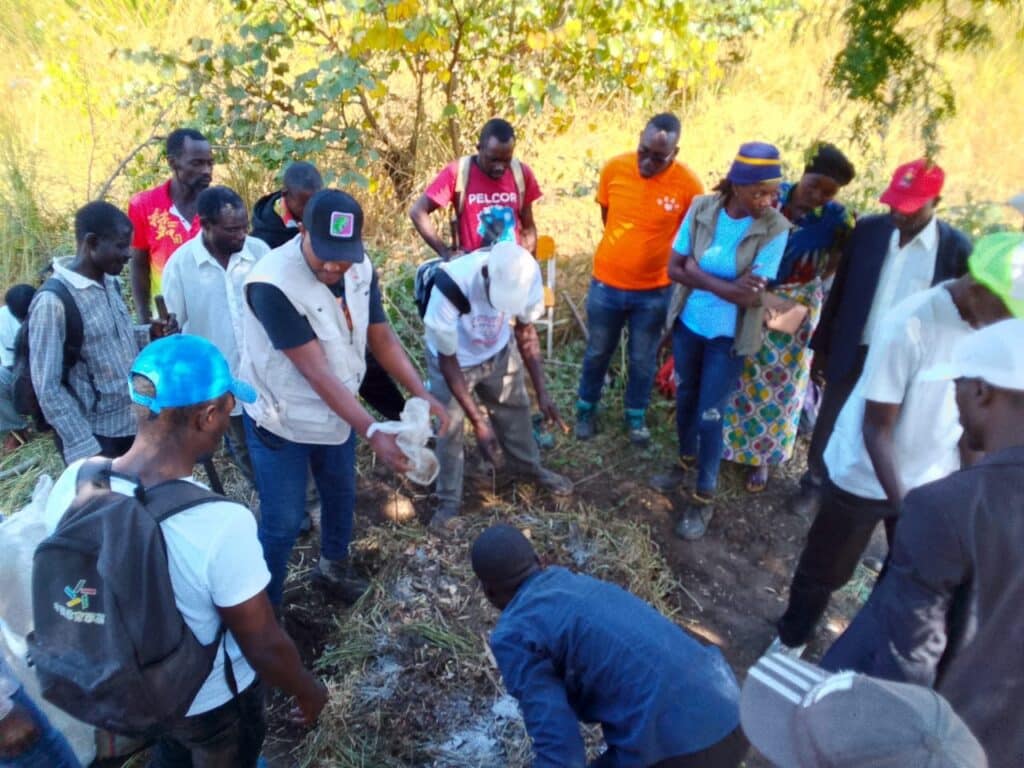
Photo: Emanuel Saprinho
“We have helped communities maximize land production by imparting skills in new crop techniques and introducing modern tools,” he said. “Technical support is just as vital as financial investment, because people can learn how to adapt to new crops and sustain their progress.”
Strength and Dignity
The Rev. João Miguel, church general director of Evangelism, emphasized the deeper mission behind the initiative. “The Yambasu Agricultural Initiative reflects the church’s mission of humanity, recognizing that a human being is a unit composed of body, mind, and spirit.”
He highlighted the project’s potential for growth. “One of the greatest strengths of this initiative is its ability to scale. The structure was designed as a replicable model, while respecting the unique characteristics of each district.
“Expansion allows the church to occupy a space of community relevance in new territories,” he said. “When neighboring districts see the church actively involved in solving local problems, they will recognize it not only as a religious building, but as a center for social and spiritual transformation.”
Said Cadir: “The Yambasu Agricultural Initiative has given us strength and dignity. It turned our struggles into opportunities, and today our community is healthier, more resilient, and full of hope.
“At 71, I can say this project has changed our lives for the better, and its seeds will continue to grow for generations to come.”
Gilberto João Augusto Guedes is director of Studies and Projects for The United Methodist Church’s Eastern Angola Annual Conference. Kudzai Chingwe is a communicator for the Zimbabwe East Conference.
The Yambasu Agriculture Initiative
The YAI program works with African United Methodist conferences toward self-sustainment using resources, both land and human, to optimize agricultural production. Through grants and training, YAI mobilizes existing land and human resources within the church; improves community livelihoods and food security long-term; and builds capacity in annual conferences toward long-term financial solvency.
Support food security and agricultural sustainability in Africa, Advance #982188.