
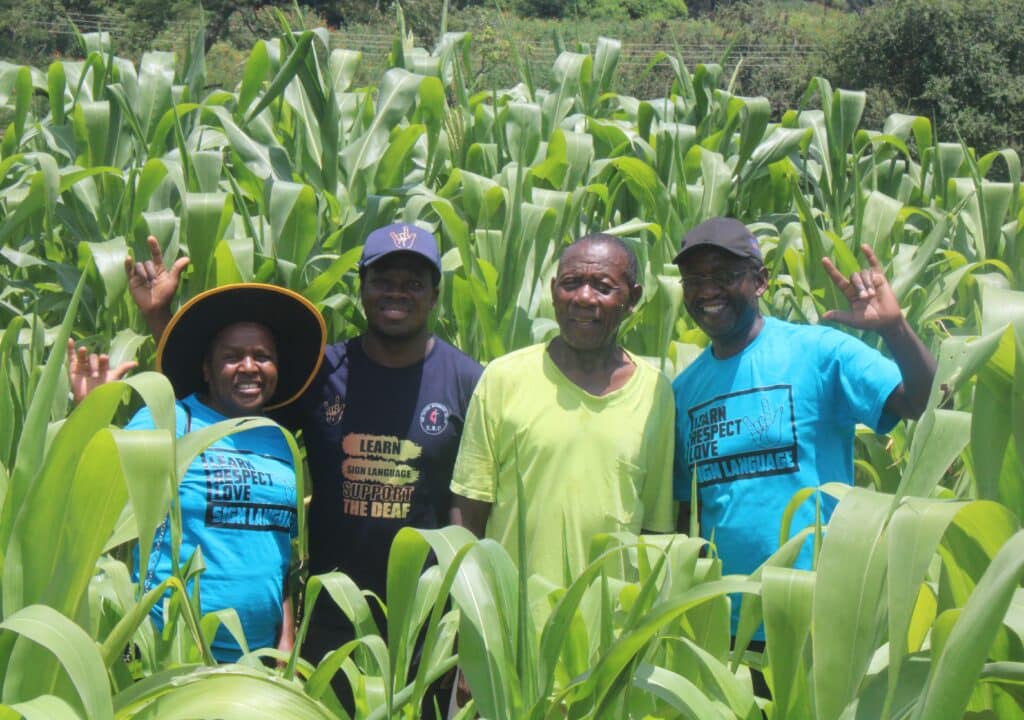
MUTARE, Zimbabwe – In the quiet Weirmouth area, the Deaf Ministry Farming Project is steadily taking root.
In its first year, the project has already produced maize and sugar beans, laying the foundation for a future of food security and economic empowerment for members of the Deaf community in The United Methodist Church’s Mutare District.
The primary objective of the project is to combat food insecurity and poverty for those served by the Deaf Ministry. The lack of income opportunities has long been a challenge for people who are Deaf or hard of hearing. While some individuals engage in buying and selling or other small enterprises, farming has proven to be one of the most reliable sources of income in Zimbabwe’s rural and peri‑urban areas.
Pastor Collins Prempeh, the first regional missionary for Deaf and hard‑of‑hearing ministries in the Zimbabwe East Annual Conference, expressed gratitude for the one‑hectare piece of land donated to the ministry. He has encouraged the Deaf community to make full use of this opportunity.
“The one‑hectare plot (nearly 2 ½ acres) was donated by John Chokwadi Katema for the Deaf Ministry Farming Project under a local UMC community arrangement. Currently, it is maize and beans production,” explained Prempeh, who used his own funds to start the initiative. “Ten Deaf members from King Hobhouse UMC are actively involved in the farming project.”
Prempeh, who is Ghanaian and Deaf, emphasized that the produce will not only sustain the ministry but also support vulnerable members of the community. The Deaf Ministry currently serves more than 100 people in the Mutare District.
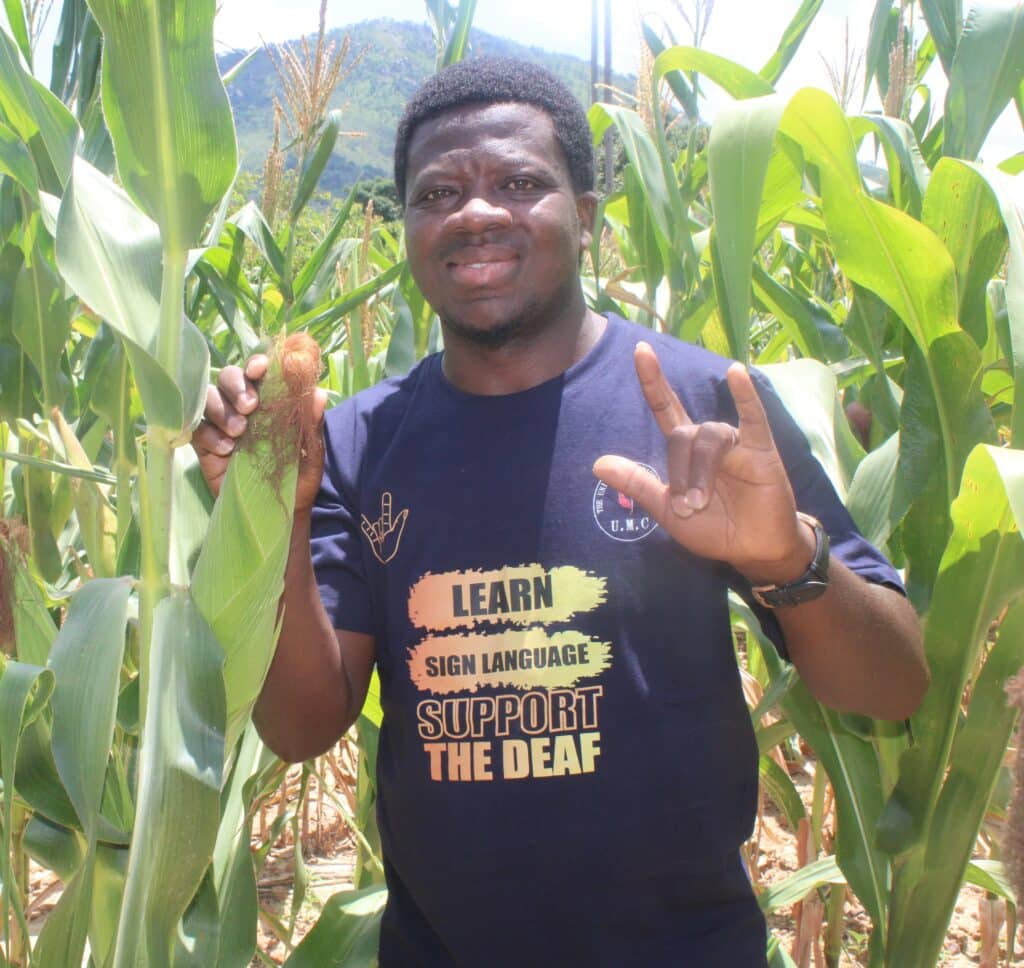
“The harvest will help us expand production and assist those in need within the (Deaf and hard-of-hearing) community,” he said. “We plan to reinvest the proceeds and broaden our crop variety, venturing into horticulture to strengthen sustainability and food security.”
One of the project’s greatest advantages is its location. The land is blessed with a perennial river, equipped with an irrigation system. This allows for year‑round crop production, a rare and valuable resource in Zimbabwe, where rainfall patterns have become increasingly unpredictable due to climate change.
So far, 10 Deaf ministry members have volunteered to work on the project. After harvesting the maize and sugar beans, they will expand production to include leafy vegetables, tomatoes, onions, peppers, carrots, and potatoes.
Giving Back Through Land
John Chokwadi Katema is a seasoned farmer who has witnessed the determination of his Deaf son and daughter‑in‑law.
“I am now old, and with my experience with my son who is Deaf together with his wife, I have seen how hardworking they are,” he said. “I offered their community a piece of land from my plot, which is three and a half hectares. I can no longer farm the whole of it, so I asked them to utilize that portion.”
His son, Ishmael Katema, expressed appreciation. “I grew up on this plot with my parents. Farming has made me what I am today. I managed to buy my house through farming, and the offer from my father is most welcome.”
The project has also drawn praise from church leaders. The Rev. Sophirina Sign, former conference connectional ministries director and now superintendent of the Mutasa Nyanga District, highlighted the importance of the initiative.
“The Deaf Ministry needed a source of income to support these families,” she said. “We are grateful that they have been given the land. Having such a plot allocated to the Deaf Ministry is a blessing, especially considering its proximity to town and irrigation potential. The Deaf community can farm horticultural crops and generate income. This income can transform their lives.”
The Rev. Godknows Risinamhodzi, the new conference connectional ministries director, described the donation as both practical and spiritual.
“We greatly appreciate the gift given to the Deaf Ministry,” Risinamhodzi said. “It came as an opportunity to implement farming projects for food security. It is always said that it is better to teach one fishing skills than to give one a fish. Skills enhance sustainability.
“This donation is part of evangelization, a demonstration of Christ’s love for all,” he added. “This year is a year of renewal, bringing new life into old life, a year of restoration. When such things happen, we see the vision of the church being taken afar.”
Planting Seeds of Hope
For members of the Deaf Ministry, the project is more than just farming – it is empowerment. Panashe Muchemwa, one of the participants, shared his excitement.
“I foresee a bright future ahead from the proceeds,” he said. “When we work as a group, we share a lot socially and evangelize to each other. I am very grateful to the Katema family and the UMC for the project.”
The Deaf Ministry Farming Project is still in its infancy, but its impact is already visible. By combining community support, church leadership and the generosity of the Katema family, the initiative is planting seeds of hope. With irrigation ensuring year‑round production and plans to diversify into other crops, the project is poised to become a model of sustainable development.
“In Mutare, where challenges of unemployment and food insecurity are widespread, the Deaf Ministry Farming Project stands as a beacon of resilience,” Prempeh said. “It is a reminder that when communities come together, even the most marginalized voices can find strength, dignity, and opportunity in the soil beneath their feet.”
The United Methodist Committee on Deaf and Hard of Hearing Ministries, part of Global Ministries, provides support and resources for developing leaders, worship and mission for and by the Deaf, hard of hearing and Deafblind. Support Global Ministries’ Global Health programs and the work of missionaries around the world.
Kudzai Chingwe is a communicator for The United Methodist Church’s Zimbabwe East Conference.