
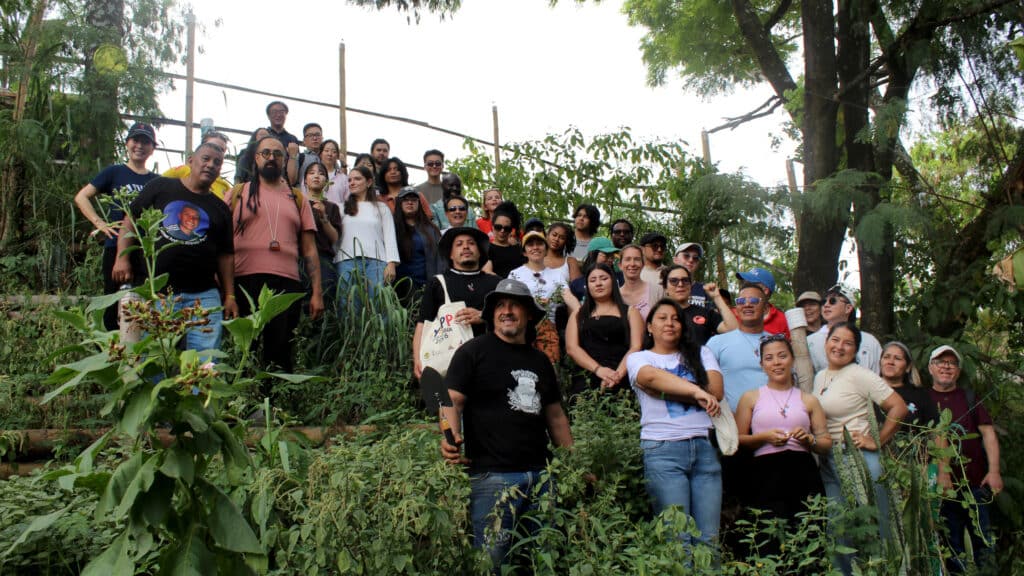
This journey has opened in me a new set of questions, a new set of prayers, and a renewed sense of direction for my own ministry.
Yeram Kim
Wesley Theological Seminary student
Korean Methodist Church
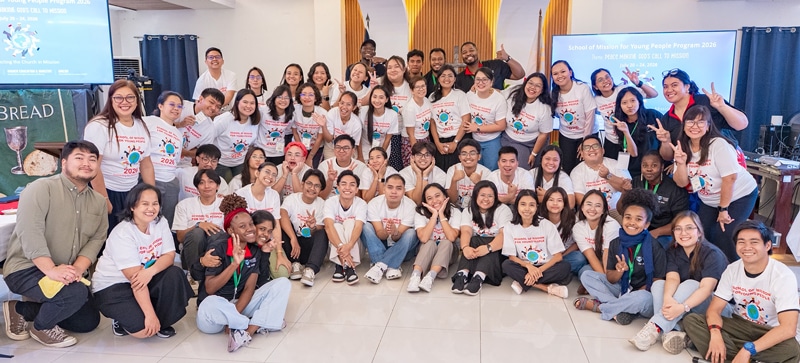
ATLANTA – Early this summer, 29 people from a dozen different countries made their way to Bogotá, Colombia, to begin a pilgrimage that would offer them an opportunity to witness how the people of a country implement peace beyond signing agreements and making proclamations.
William Morris, a participant and student at Claremont School of Theology in California, noted: “We encountered stories of pain, hope, injustice, resilience, and reconciliation. During our pilgrimage, we realized that the most meaningful way to connect for those of us coming from another context is through presence and proximity. Building trust, listening to shared stories, and walking alongside others all require us to be physically close and actively involved.”
The 2026 Young Adult Pilgrimage of Peace (YAPP) was convened and sponsored primarily by The United Methodist Church through Global Ministries in partnership with the Korean Methodist Church and the World Methodist Council. The Colombian Methodist Church (CMC), served as the local host and accompanied pilgrims along their way.
Colombia offers a significant context for engagement in peacebuilding. Despite the 2016 peace framework, an agreement signed by the Revolutionary Armed Forces of Colombia (FARC) and the national government that ended more than 60 years of conflict, violence persists, peace negotiations remain fragile, and vulnerable communities continue to require protection. The recent change in the government in Colombia will further test the peace framework.
In partnership with Global Ministries, the Colombian Methodist Church strengthens civil society participation through initiatives such as training for accompaniment in territories affected by conflict and equipping pastors and lay leaders to mediate conflict and foster grassroots peacebuilding. The church also supports the ecumenical work of the Inter-Church Dialogue for Peace (DiPaz), an organization of Protestant evangelical churches and other Christians that works to overcome violence and achieve peace through dialogue.
Global Ministries has coordinated and sponsored several peace pilgrimages over the past few years in partnership with The World Council of Churches and other Methodist organizations to offer this kind of experience to Methodist students and young adult leaders.
Roland Fernandes, general secretary for Global Ministries and Higher Education and Ministry, notes that: “Global Ministries has been committed to the YAPP as it is an important means for inviting young people to walk with communities facing oppression and injustice, listen, and be transformed by stories of resilience and hope. Through these encounters, young peacemakers are nurtured and equipped to bring what they learn back to their churches to strengthen ministries of peace with justice.”
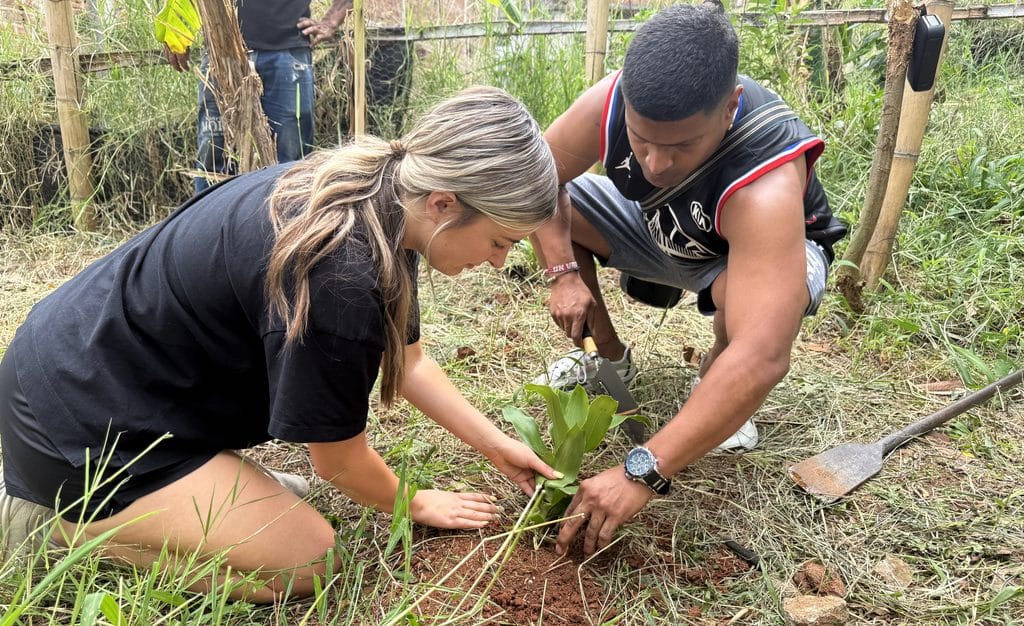
A Deeper Sense of “Neighbor”
The pilgrimage began and ended in Bogotá, Colombia’s capital city. Ten arrived from The United Methodist Church, including six students attending seminaries in the U.S., two Global Ministries staff members, and one from the UMC Peace Committee. Seven arrived from Korea with the Methodist Church of Korea, including two students. The World Methodist Council supported young adults from Zimbabwe and South Africa, the Philippines and Nepal, the United Kingdom and Italy, with two staff from the Republic of Ireland and Mexico and three young adult representatives from the Council of Evangelical Methodist Churches in Latin America and the Caribbean (CIEMAL), from El Salvador, Chile, and Mexico. The CIEMAL representatives were supported by Global Ministries.
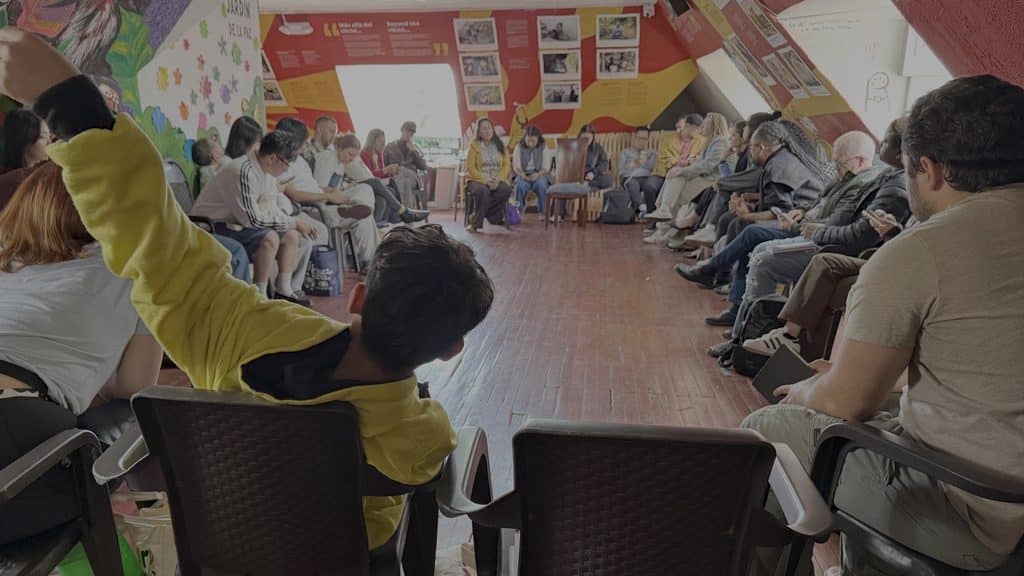
The pilgrims made their way to the Colombian Methodist Church in Bogotá, where several Colombian guests invited them to learn about the history and current state of internal and external conflicts affecting the country. Hannah Reasoner, a Global Missionary, and Nataly Monterozza, a Global Mission Fellow, who are both working with Centro Popular para América Latina de Comunicación (CEPALC) in Bogotá, also accompanied the group and provided English translation.
Bishop Luis Andrés Caicedo of the Colombian Methodist Church addressed the pilgrims and offered a sermon, one that stuck with Morris, the student from Claremont School of Theology.
“While the U.S. government continues to stoke an atmosphere of violence and fear, I return to the sermon given by Bishop Luis Andrés during our visit to the Methodist Church of Bogotá,” Morris recalled: “‘A neighbor isn’t simply someone who is near me. A neighbor is someone to whom I choose to reach out. Neighbor is not defined by blood, nation, religion, social class, or identity. Neighbor is something I build when I cross the distance that the system taught me to maintain.’”
The Methodist Church in Bogotá is itself a rare gift of love and acceptance. The majority of its members are from the LGBTQI+ community in the city who find both welcome and support in a place that honors and values them and nourishes their Christian faith. Emily Gonzalez, a student at Duke Divinity School, could relate to their commitment:
“The deeply relational interconnectedness of the Hispanic culture bears its fruit in Acompañar which says, ‘your pain is my pain’ and ‘we are siblings not just simply neighbors.’ Acompañar is what has made the Colombian peace efforts be shaped around restorative justice, healing for the incredibly diverse groups of people harmed by the conflict. Acompañar is what links the LGBTQIA+ community together in a country and culture that is still terribly hostile and violent toward them.”
Remembrance, Resistance, and Stubborn Hope
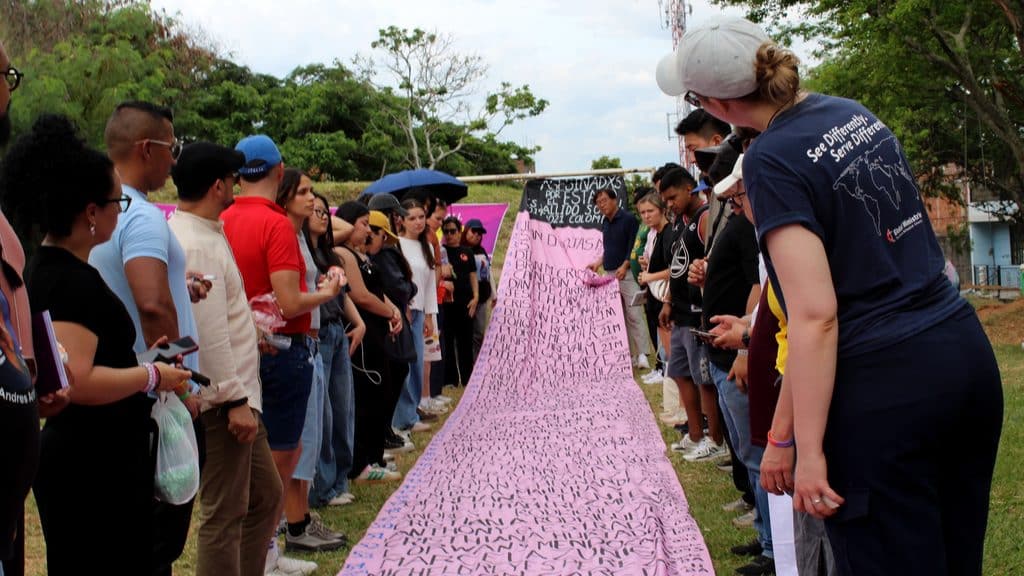
A second destination for the pilgrimage was Calí, closer to Colombia’s western coast. In 2021, as the COVID-19 restrictions eased, a proposed law for tax reform that included severe economic measures resulted in nationwide protests that were met with harsh government police actions. In Calí, particularly in the Siloé neighborhood, young people lost their lives, refusing to back down. Rev. Katie Paul, a pilgrim and pastor from the Oklahoma Annual Conference, explains:
“Nowhere did the cost of this unfinished peace become clearer than at the Glorieta traffic circle in Calí, where 113 young people died in state violence during the 2021 protests. A popular tribunal later ruled that these killings amounted to genocide against young people. Standing at that memorial, I understood why Colombians insist on holding memory in public spaces. Forgetting is its own kind of erasure, and the families still awaiting justice are refusing to be written off. Lament is a theological act of resistance against a world that would rather move on and forget.”
Nataly Monterozza, who comes from Central America, lost her aunt to gang members in a random act of violence. She learned how deeply connected her experience is to Colombians who have lost family members:
“No one can give back the people we lost, and although time goes by, the pain does not simply disappear. I also want to remember my aunt for more than the way she lost her life. During this pilgrimage, I learned that keeping alive the memory of those we have lost is also a way of building peace. They did not leave because they chose to; someone took their lives, and remembering them, speaking about them, and honoring their dignity are also ways of resisting forgetfulness and helping our society heal.”
Racheal Kerr, a pilgrim participant from Garrett-Evangelical Theological Seminary in Evanston, Illinois, wrote in her reflection:
“Colombia taught me that peace is cultivated through memory, accompaniment, and hope. My calling is not simply to teach these values but to embody them, so that my classroom might itself become a place of peace – a table where every student is known, every story is honored, and every person is invited to belong.
“The stories shared in Colombia are gifts – ripe fruits generously offered – and they remind me that every community possesses its own expressions of la Resistencia (resistance), la terca Esperanza (stubborn hope), and las casas de la memoria (a place of memory). These, too, can become gifts of peace for others.”
After the pilgrims headed back to Bogotá, they reflected on what they had witnessed and experienced in Calí and earlier in Bogotá. Karson Davis, a student at St. Paul School of Theology in Kansas, summed up the impact of the places, people, and situations they had seen:
“As I continue to process this experience, I hope these reflections serve as a reminder that peace is not simply the absence of conflict. It is the daily work of seeing one another, honoring the sacred worth of every person as a child of God, and choosing, again and again, to walk alongside one another in hope.”
This story is composed of the reflections of the participants from the United Methodist Church who made the journey: Yeram Kim, William Morris, Rev. Katie Paul (published by the Oklahoma Conference), Emily Gonzales, Racheal Kerr, Nataly Monterozza, and Karson Davis. Edited by Christie R. House.
Peace, Justice, and Reconciliation
Working in collaboration with global and local partners, especially in countries that receive little international attention, Global Ministries’ peace programs foster advocacy, accompaniment, and action networks; strengthen interfaith collaboration; and support humanitarian aid and development programs.
A gift to Peace and Justice will help to strengthen collaboration with United Methodist and other partners to promote peacebuilding around the world.