
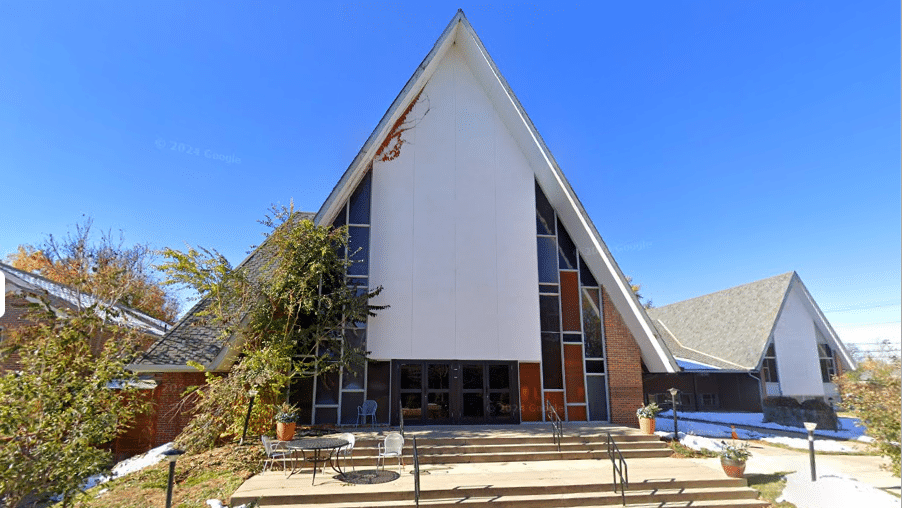
ATLANTA – Global Ministries EarthKeepers commissioned in November 2025, some trained in person in Des Moines, Washington, and others via an online course, represented 24 annual conferences, five U.S. UMC jurisdictions (regions) and a diversity of people too, in age, gender, and ethnicity. Participants included clergy, laity, and annual conference and agency staff. Likewise, the training serves United Methodists in many different contexts through its focus on anti-racism.
The Global Ministries EarthKeeper program supports people looking to turn an idea on environmental care into action as well as those who want to deepen an existing ministry. Each EarthKeeper develops a project, often in small groups and in conversation with their peers, that relates directly to the individual’s community, experience, skills, and vision.
The projects being developed by this 2025 class are as diverse and creative as the EarthKeepers. Some are developing a method for composting church food waste, while others are concentrating on freshwater river conservation or using church land to restore an indigenous ecosystem. A recognition of Nature’s connection to spiritual care and guidance fosters projects of garden cultivation and quiet space, or reviving flower and insect populations and prairie habitat after a drought season.
Some EarthKeepers concerned with food security in their neighborhoods work on vegetable and fruit gardens, or a free community seed “library,” or teaching more sustainable garden and cultivation skills to people of all ages. Some with language skills are working to develop EarthKeepers resources in Spanish.
Clean Energy Is Not Out of Our Reach
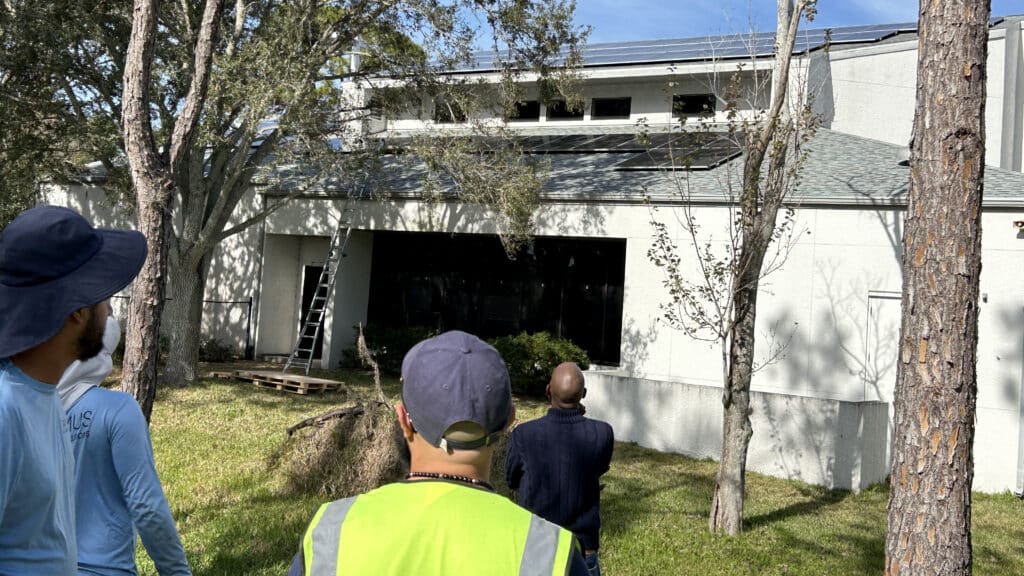
The Rev. Lee Hall-Perkins of Clearwater, Florida, has led his congregation, Mt. Zion United Methodist Church, to install solar panels on the roof of their worship space. Mt. Zion is a predominantly Black congregation in a Black community. Their pastor attended the EarthKeepers training in Washington state.
“In the UMC, a denomination whose churches are more than 90% white, I’m not always sure that what I will receive will be applicable to my Black community,” Hall-Perkins said.
“But, built into this training is an anti-racism component. The information about environmental racism resonated, that Black and Brown people are often left out of green and clean technology. Hearing that helped me shape how I talked about the project, realizing we were ‘breaking the green ceiling’ as the only Black congregation in the county area that had made this shift to solar energy. Our congregation is committed to justice, and this is a new frontier of justice.”
Pastor Hall-Perkins and a few others from Mt. Zion attended monthly Zoom meetings about navigating the Direct Pay program of the federal Inflation Reduction Act, hosted by Global Ministries’ Environmental Sustainability program. Mt. Zion started roof repairs in 2025 to prepare for their solar installation. Once installation of the solar panels started, it only took 10 days for the installers to complete.
Food Security Requires Partners
Andi Villar Arroyo, from Redmond, Washington, also attended the in-person training last fall. He is a candidate for ordination studying for his Master of Divinity at Perkins School of Theology. He is developing a project called Jardines en Red – Invernadero Solidario (Networked Gardens – Solidarity Greenhouse). This project is his response to the Christian call to care for creation while addressing food insecurity at a local level.
“Because our church is located in the city center and does not have access to large areas of land for cultivation,” Villar notes, “the project seeks to connect available community spaces for food production as a concrete expression of discipleship and service. Small cultivation spaces together can produce fresh food to be shared with individuals and families experiencing food insecurity, particularly within and around our faith community.”
Villar also valued the EarthKeepers training he received: “It helped me integrate theology and action more intentionally. Conversations with other participants refined my project and strengthened its communal grounding. Within the context of Hispanic ministry, this experience has also encouraged us to begin organizing toward replicating this training in our local settings, recognizing that this will require patience, ongoing formation, and sustained accompaniment.”
Members of Villar’s small group had Hispanic roots and their conversations were held mostly in Spanish. The 2026 training in May will also offer limited Spanish with a Spanish small group.
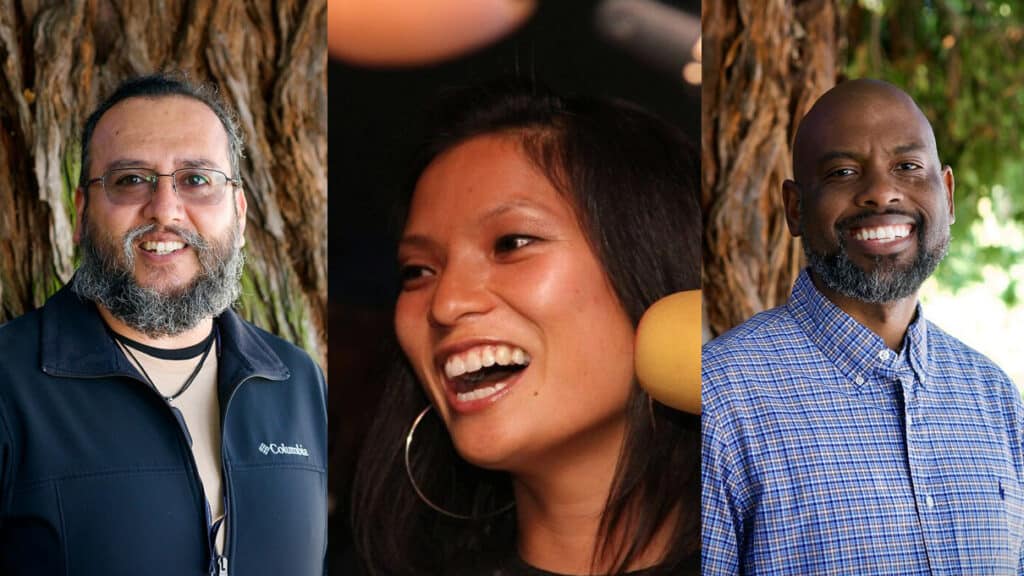
In a similar but different vein, EarthKeeper Carolyn Tarr in Denver, Colorado, who attended training online, has been working on a plan for the Faithfull Food Forest. “A Food Forest is basically a 7-layer, regenerative ecological system. The ecosystem requires all of that biodiversity to be in one system linked together. And because of that diversity, it is able to thrive and regenerate itself,” she explained. (See this example in Philadelphia.)
“We are developing the food forest in front of what is a former United Methodist Church called Montclair.” This church closed and then was reopened as a dinner church. Now it will be reimagined again as a space that will grow diverse communities, both social and environmental. Tarr is the director of The Foundation, an ecumenical campus ministry of the University of Denver, with an office at University Park United Methodist Church. The Foundation is a connectional ministry that weaves together the university with the greater Denver community.
“I deeply believe that no one is too rich to receive nor too poor to contribute. To live authentically into that practice requires us to consider how we create space to grow the things that people have to offer,” Tarr noted. The Foundation has fostered partners beyond the University of Denver to tap into expertise in the different areas it wants to explore, such as a tool library, seed and harvest events, what to plant and when.
Tarr believes that building a multicultural community needs more than a statement on anti-racism and that many people, particularly majority white communities, are really stuck on how to “do” diversity. In the EarthKeeper training, she found that people kept coming back to what anti-racism really means and how to live it as well as believe it.
“That is a wonderful way to make God’s creation something that lives in us. Then we see that diversity is not something that we have to manufacture, it is something that we can root into.”
Tarr also noted: “EarthKeepers is a really encouraging space, and an important space in that this is how we build hope. We don’t build hope by hiding, we build hope by going out and doing the hard things and not knowing exactly how to do them, but we go out and do them anyway.”
Christie R. House is a consultant writer and editor with Global Ministries, UMCOR and GBHEM.
Interested in Exploring More About EarthKeepers?
EarthKeepers celebrates its 10th anniversary this year and applications are now being accepted for the 2026 class of EarthKeepers, with online training May 1-16. The 2026 training in May will also offer limited Spanish with a Spanish small group.
Visit the EarthKeepers webpage for more information: https://umcmission.org/work/humanitarian-relief/environmental-sustainability/earthkeepers/