
MUTARE, Zimbabwe – For years, many young people in churches across The United Methodist Church’s Mutare District quietly battled drug and substance addiction. Shame, fear of judgment, and lack of safe spaces kept them silent.
Behind the hymns and sermons, some youths felt isolated, unable to share their struggles with parents, teachers or even their pastors. The church community, though caring, often lacked the tools to recognize and respond to these hidden battles.
That began to change with the Pillars & Plants: Prevention, Support, and Empowerment project, funded by Global Ministries and led by the Africa University Clinical Research Centre. The United Methodist-related school is based in Mutare.
What started in 2018 as a youth-focused initiative has blossomed into a movement of openness, empowerment, and collective responsibility that has helped more than 1,500 youths so far.
Pillars & Plants is designed to empower youths and their “gatekeepers” — parents, teachers, faith leaders, and mentors — with knowledge and skills to build healthier, purpose-driven lives, said Dr. Fadzai N. Mutseyekwa, project lead director at the Africa University Clinical Research Centre.
“The initiative integrates lifestyle medicine, mental health, reproductive health, life-skills training, and spiritual empowerment, guided by Psalm 144:12: ‘Then our sons in their youth will be like well-nurtured plants, and our daughters will be like pillars carved to adorn a palace,’” Mutseyekwa said.
This holistic approach recognizes that addiction is not just a medical issue but a spiritual, social, and emotional challenge requiring collective effort.
‘A Source of Hope’
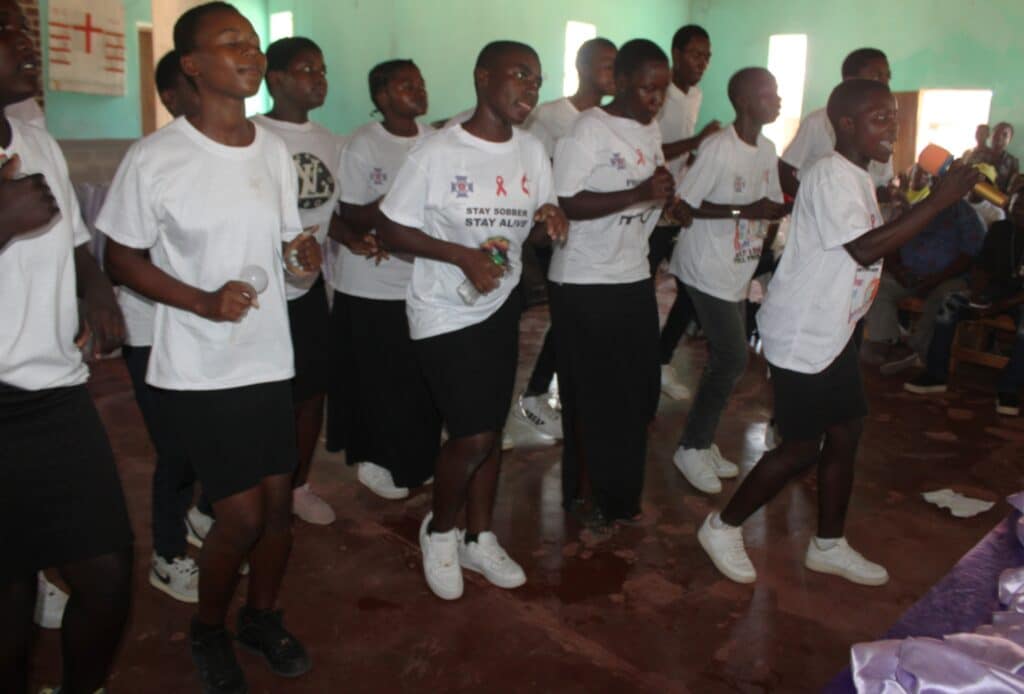
With $5,000 earmarked for activities, Pillars & Plants raised awareness of drug and substance abuse by launching art expos at Chinyauhwera High School as well as United Methodist Youth Fellowship song and dance festivals across the Mutare District’s urban and rural circuits, Mutseyekwa said. The district is part of The United Methodist Church’s Zimbabwe East Annual Conference.
Evidence Mwayeka, the community engagement officer for Pillars & Plants, emphasized the theme: “Don’t Let Drugs Get in the Way of Your Dreams.” Instead of traditional lectures, the project uses music, dance, and art to engage young people.
“Youth enjoyed, related to, and remembered the lessons,” said Mwayeka, who also works at the Africa University Clinical Research Centre. “Unlike formal awareness sessions where attention is low, these creative platforms sparked interest and encouraged openness.”
The impact was immediate. Many youths began opening up about their struggles, seeking help and sharing experiences. Church leaders and elders joined in, offering guidance and support. What was once a taboo subject became a shared concern, openly discussed in safe, non-judgmental spaces.
“The project has become a source of hope and transformation for the youths and the church at large,” Mwayeka reflected.
Emphasizing Inclusion
Ivy Chinamaringa, president of the Mutare District United Methodist Young Fellowship, said she was humbled to witness the program among youths.
“Education on the causes, effects, consequences, and preventative measures against substance and drug abuse was shared through songs, drama, and art and creating safe spaces in Mutare District,” she explained.
“Trained gatekeepers like whistleblowers are used to identify drug and substance users so that no one is left out,” she said.
“The emphasis is on accepting and including those taking drugs in our youth groups without judging and discriminating but rehabilitating them,” she said.
Discovering Hidden Talents
Susan Dzobo, a teacher at Chinyauhwera High School, celebrated how art revealed hidden talents among students. “Clear and powerful messages were sent out through drawings, and we managed to identify talents amongst learners.”
Darven Mutoyi, 16, an art student at the school, outmatched 25 participants to win one of the competitions, held Oct. 16 at Chinyauhwera High School in the Zimunya Central Circuit.
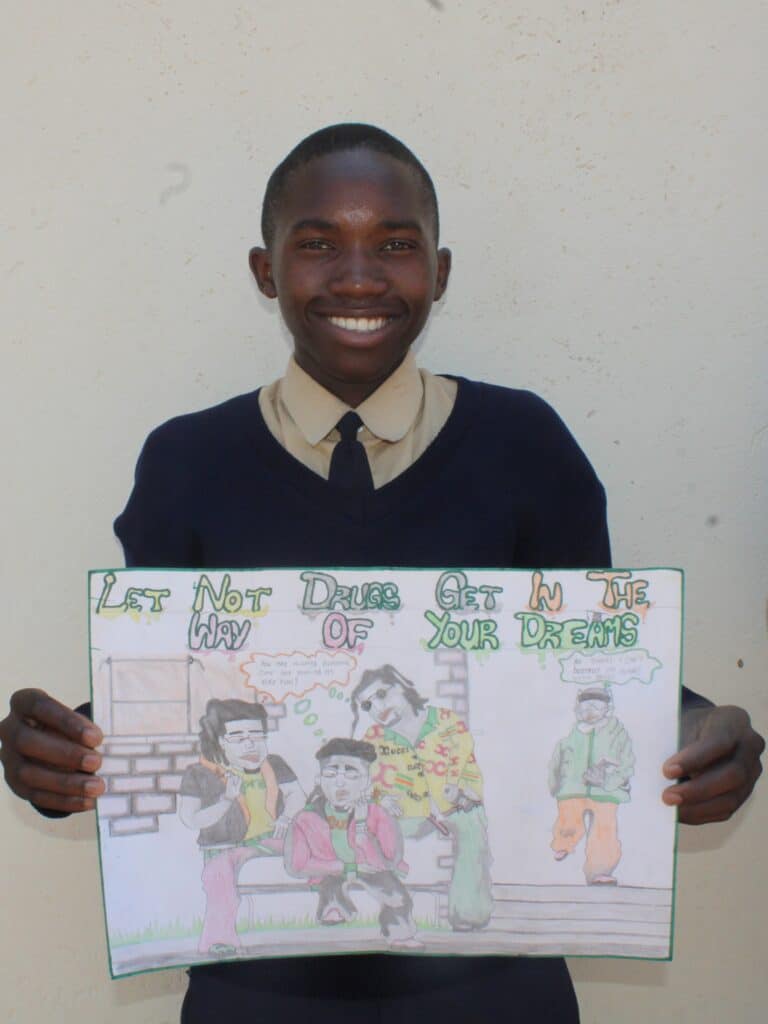
“After understanding the theme ‘Don’t Let Drugs Get in the Way of Your Dreams’ and what I am seeing happening in society in general, I took a pen and paper to send a clear message to the society,” he said.
“I am talented in art, and I took this opportunity to showcase my talent by helping youths like me to stop abusing drugs,” Mutoyi said. He wants to study art and design at Mutare Polytechnic, “if funds permit,” he said.
Pastor Paul Tawona, who serves the Gwese Circuit, rejoiced as his youths won first prize at a Nov. 1 event at Munyarari Local Church in the Zimunya Central Circuit. “Participation enabled the youth to meet often, share about drugs, and uplift their spirit.”
Music became a powerful tool. Bongani Musamire of the Gwese Circuit composed “Stop Drug and Substance Abuse,” inspired by Proverbs 20:1: “Wine is a mocker and beer a brawler; whoever is led astray by them is not wise.”
His song tackled myths about drug abuse and painted vivid images of its consequences: lifeless youths on the streets, vulnerable girls exploited, and the urgent call to stop “guka” (crystal methamphetamine) and “ganja” (cake with drugs).
The chorus echoed a collective plea: “Stop drug and substance abuse; you’ll die early; you’ll fail in life; you’ll suffer, my dear friends.”
Joining the National Fight
Mary Kamusono, 16, from the Gwese Circuit, said participating in the Nov. 1 festival was eye‑opening.
“Participating in the festival helped us to know types of drugs and substances, and we were happy to join in the national fight against drug and substance abuse, which is destroying our country,” she said.
“We were also made aware of various places where we can get assistance on drug and substance abuse prevention and rehabilitation, such as guidance and counseling centres, prisons, and 116,” she said. The 116 is a free-of-charge, 24-hour call line for children who need help, counseling, or to report abuse.
Dr. Walter Mutindori, health board chair of the Zimbabwe East Annual Conference, applauded the church for its continued fight against drug and substance abuse among youths through music, dance, and art.
“The initiatives enable behavioural change as the youths would be occupied, thereby reducing idle time that could lead to experimenting with drugs,” he said.
“Youths often listen to and follow their peers,” he continued. “When talented peers use music and dance to advocate against drugs, it creates strong positive peer pressure and motivation to stay drug‑free.”
A Shared Responsibility
Competitions help young people discover and develop their talents, boosting self‑esteem and providing alternative life goals, Mutindori said. “These competitions enable youths to uncover their gifts, strengthen their confidence, and pursue life goals that may lead to careers in the arts.”
He further highlighted the wider community benefits. “It brings the schools, families, and community members together, fostering unity and shared responsibility in addressing drug abuse.”
“Reduced drug use promoted discipline, teamwork, and respect,” Mutindori said, “while also leading to healthier youths, a more productive workforce, and greater opportunities for employment and entrepreneurship in the arts.”
Chingwe is a communicator for The United Methodist Church’s Zimbabwe East Annual Conference.